


 Cart
Cart
 sales@molnova.com



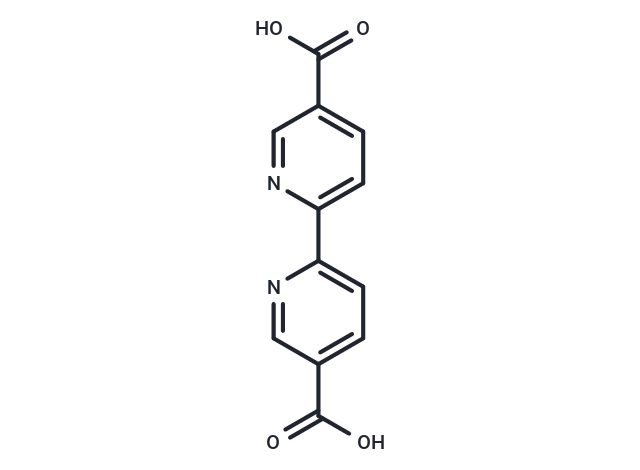
Prolyl-4-hydroxylase Inhibitor 11
CAS No. 1802-30-8
Prolyl-4-hydroxylase Inhibitor 11( —— )
Catalog No. M35880 CAS No. 1802-30-8
Prolyl-4-hydroxylase Inhibitor 11, a novel proline 4-hydroxylase inhibitor, shows protective effects against oxidative stress and Cu(II) toxicity in Chlorella vulgaris.
Purity : >98% (HPLC)
 COA
Datasheet
HNMR
HPLC
MSDS
Handing Instructions
COA
Datasheet
HNMR
HPLC
MSDS
Handing Instructions
| Size | Price / USD | Stock | Quantity |
| 100MG | Get Quote | In Stock |


|
| 200MG | Get Quote | In Stock |
|
| 500MG | Get Quote | In Stock |
|
| 1G | 27 | In Stock |
|
Biological Information
-
Product NameProlyl-4-hydroxylase Inhibitor 11
-
NoteResearch use only, not for human use.
-
Brief DescriptionProlyl-4-hydroxylase Inhibitor 11, a novel proline 4-hydroxylase inhibitor, shows protective effects against oxidative stress and Cu(II) toxicity in Chlorella vulgaris.
-
DescriptionProlyl-4-hydroxylase Inhibitor 11, a novel proline 4-hydroxylase inhibitor, shows protective effects against oxidative stress and Cu(II) toxicity in Chlorella vulgaris.
-
In Vitro——
-
In Vivo——
-
Synonyms——
-
PathwayOthers
-
TargetOther Targets
-
RecptorOthers
-
Research Area——
-
Indication——
Chemical Information
-
CAS Number1802-30-8
-
Formula Weight244.2
-
Molecular FormulaC12H8N2O4
-
Purity>98% (HPLC)
-
Solubility——
-
SMILESOC(=O)c1ccc(nc1)-c1ccc(cn1)C(O)=O
-
Chemical Name——
Shipping & Storage Information
-
Storage(-20℃)
-
ShippingWith Ice Pack
-
Stability≥ 2 years
Reference
molnova catalog



related products
-
Promethazine Sulfoxi...
Promethazine sulfoxide is a metabolite of the histamine H1 receptor antagonist Promethazine.It is formed from promethazine by the cytochrome P450 (CYP) isoform CYP2D6.
-
(3R,5S,E)-1,7-Diphen...
(3R,5S,E)-1,7-Diphenylhept-1-ene-3,5-diol is a natural product for research related to life sciences.
-
Picloram
Picloram is an auxinic herbicide that is widely used for controlling broad leaf weeds.
