


 Cart
Cart
 sales@molnova.com



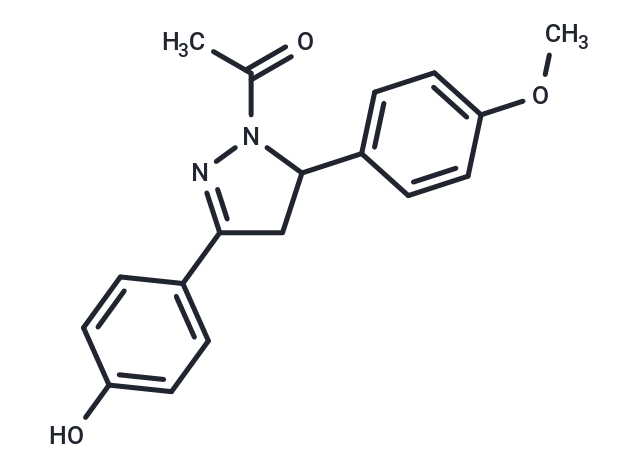
α-Amylase-IN-1
CAS No. 148404-10-8
α-Amylase-IN-1( —— )
Catalog No. M35739 CAS No. 148404-10-8
α-Amylase-IN-1 is an α-Amylase inhibitor (IC50: 0.5509 μM).
Purity : >98% (HPLC)
 COA
Datasheet
HNMR
HPLC
MSDS
Handing Instructions
COA
Datasheet
HNMR
HPLC
MSDS
Handing Instructions
| Size | Price / USD | Stock | Quantity |
| 5MG | 172 | In Stock |


|
| 10MG | 254 | In Stock |
|
| 25MG | 392 | In Stock |
|
| 50MG | 531 | In Stock |
|
| 100MG | 710 | In Stock |
|
| 200MG | 958 | In Stock |
|
| 500MG | Get Quote | In Stock |
|
| 1G | Get Quote | In Stock |
|
Biological Information
-
Product Nameα-Amylase-IN-1
-
NoteResearch use only, not for human use.
-
Brief Descriptionα-Amylase-IN-1 is an α-Amylase inhibitor (IC50: 0.5509 μM).
-
Descriptionα Amylase-IN-1 (Compound 11) is an α-Amylase inhibitor with an IC50 value of 0.5509 μM. α Amylase-IN-1 has antioxidant activity with an IC50 value of 53.49 μM for scavenging DPPH free radicals. IC50 can be used in the study of diabetes and oxidative stress-related diseases.
-
In Vitro——
-
In Vivo——
-
Synonyms——
-
PathwayOthers
-
TargetAntioxidant
-
RecptorAmylase | Antioxidant
-
Research Area——
-
Indication——
Chemical Information
-
CAS Number148404-10-8
-
Formula Weight310.35
-
Molecular FormulaC18H18N2O3
-
Purity>98% (HPLC)
-
Solubility——
-
SMILESC(C)(=O)N1C(CC(=N1)C2=CC=C(O)C=C2)C3=CC=C(OC)C=C3
-
Chemical Name——
Shipping & Storage Information
-
Storage(-20℃)
-
ShippingWith Ice Pack
-
Stability≥ 2 years
Reference
1. Ali A, et al. Dihydropyrazole Derivatives Act as Potent α-Amylase Inhibitors and Free Radical Scavengers: Synthesis, Bioactivity Evaluation, Structure-Activity Relationship, ADMET, and Molecular Docking Studies. ACS Omega. 2023 Jun 2;8(23):20412-20422.?
molnova catalog



related products
-
Delta-Sleep Inducing...
Delta-Sleep Inducing Peptide is a neuropeptide with antioxidant and anxiolytic properties.
-
Hoechst 33258
Hoechst 33258 is a benzimidazole anti-filarial agent. it is fluorescent when it binds to certain nucleotides in DNA, thus providing a tool for the study of DNA replication. it also interferes with mitosis.
-
Dihydro-N-Caffeoylty...
Dihydro-N-Caffeoyltyramine is a compound extracted from Lycii Cortex that has antioxidant and antifungal activities and can be used to study fungal infections.
