


 Cart
Cart
 sales@molnova.com



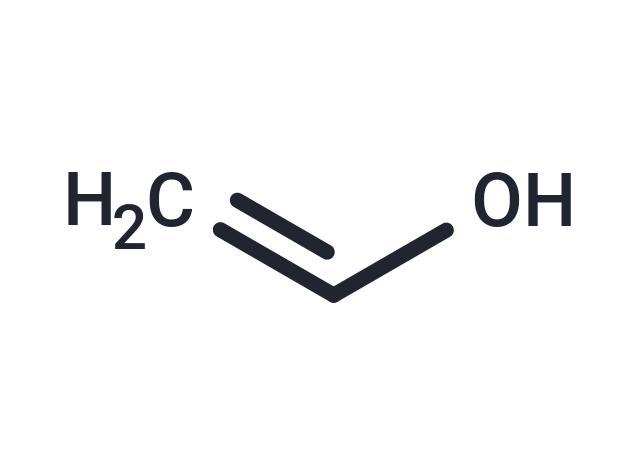
Poly Vinyl Alcohol
CAS No. 9002-89-5
Poly Vinyl Alcohol( —— )
Catalog No. M35262 CAS No. 9002-89-5
Poly Vinyl Alcohol (Polyvinyl alcohol) is a water-soluble, biodegradable, wound-healing polymer used in a wide range of biomedical applications.Poly Vinyl Alcohol is commonly used in the manufacture of medical excipients.
Purity : >98% (HPLC)
 COA
Datasheet
HNMR
HPLC
MSDS
Handing Instructions
COA
Datasheet
HNMR
HPLC
MSDS
Handing Instructions
| Size | Price / USD | Stock | Quantity |
| 100MG | Get Quote | In Stock |


|
| 200MG | Get Quote | In Stock |
|
| 500MG | Get Quote | In Stock |
|
| 1G | 27 | In Stock |
|
Biological Information
-
Product NamePoly Vinyl Alcohol
-
NoteResearch use only, not for human use.
-
Brief DescriptionPoly Vinyl Alcohol (Polyvinyl alcohol) is a water-soluble, biodegradable, wound-healing polymer used in a wide range of biomedical applications.Poly Vinyl Alcohol is commonly used in the manufacture of medical excipients.
-
DescriptionPolyvinyl alcohol (Mw 31000-50000, 98-99% hydrolyzed), also known as PVA, is a vinyl water-soluble polymer that can be used as a non-ionic surfactant. It can also be used as a biodegradable polymer and can be used in adhesives, coatings, textiles, ceramics and cosmetics.
-
In Vitro——
-
In Vivo——
-
Synonyms——
-
PathwayOthers
-
TargetOther Targets
-
RecptorOthers
-
Research Area——
-
Indication——
Chemical Information
-
CAS Number9002-89-5
-
Formula Weight44.05
-
Molecular Formula(C2H4O)x
-
Purity>98% (HPLC)
-
Solubility——
-
SMILESC(=C)O
-
Chemical Name——
Shipping & Storage Information
-
Storage(-20℃)
-
ShippingWith Ice Pack
-
Stability≥ 2 years
Reference
1. DeMerlis CC, et al. Review of the oral toxicity of polyvinyl alcohol (PVA). Food Chem Toxicol. 2003 Mar;41(3):319-26.?
molnova catalog



related products
-
Lenacapavir
Lenacapavir is a potent capsid-targeting inhibitor of HIV replication. Lenacapavir shows anti-HIV activity with an EC50 of 100 pM in MT-4 cells.
-
11-Oxomogroside IVa
The fruits of Siraitia grosvenorii Swingle.
-
Epoxomicin
Epoxomicin is a selective proteasome inhibitor with anti-inflammatory activity, inhibits primarily the CH-L activity of the 20S proteasome.
