


 Cart
 sales@molnova.com




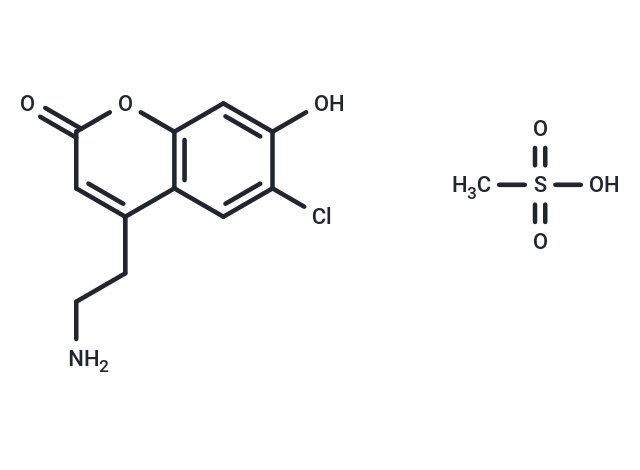
FFN 102 mesylate
CAS No. 1883548-92-2
FFN 102 mesylate( —— )
Catalog No. M35260 CAS No. 1883548-92-2
FFN 102 mesylate is a pH responsive fluorescent false neurotransmitter (FFN), a selective dopamine transporter (DAT) and VMAT2 substrate. Exhibits no significant binding to a panel of 38 CNS receptors, including dopamine and serotonin receptors.
Purity : >98% (HPLC)
 COA
Datasheet
HNMR
HPLC
MSDS
Handing Instructions
| Size | Price / USD | Stock | Quantity |
| 5MG | 64 | In Stock |


|
| 10MG | 96 | In Stock |
|
| 25MG | 164 | In Stock |
|
| 50MG | 230 | In Stock |
|
| 100MG | 333 | In Stock |
|
| 200MG | 462 | In Stock |
|
| 500MG | Get Quote | In Stock |
|
| 1G | Get Quote | In Stock |
|
Biological Information
-
Product NameFFN 102 mesylate
-
NoteResearch use only, not for human use.
-
Brief DescriptionFFN 102 mesylate is a pH responsive fluorescent false neurotransmitter (FFN), a selective dopamine transporter (DAT) and VMAT2 substrate. Exhibits no significant binding to a panel of 38 CNS receptors, including dopamine and serotonin receptors.
-
DescriptionFFN 102 mesylate is a synthetic biogenic neurotransmitter analogue with PH-dependent fluorescence and electrical activity.
-
In Vitro——
-
In Vivo——
-
Synonyms——
-
PathwayOthers
-
TargetOther Targets
-
RecptorOthers
-
Research Area——
-
Indication——
Chemical Information
-
CAS Number1883548-92-2
-
Formula Weight335.76
-
Molecular FormulaC12H14ClNO6S
-
Purity>98% (HPLC)
-
Solubility——
-
SMILESO=C1OC=2C=C(O)C(Cl)=CC2C(=C1)CCN.O=S(=O)(O)C
-
Chemical Name——
Shipping & Storage Information
-
Storage(-20℃)
-
ShippingWith Ice Pack
-
Stability≥ 2 years
Reference



-
1-Phenylethanol
1-Phenylethanol has a nongenotoxic mode of action responsible for the lung and liver tumors observed in mice following 2 years of inhalation exposure to ethylbenzene.
-
Cltrinin
Citrinin (NSC 186) is a mycotoxin that causes food contamination and has different toxic effects. Citrinin is an effective oral anticancer agent. Citrinin has various regulatory effects on mouse immune system, including regulating the number of immune cells, inducing apoptosis and autophagy of immune cells, altering toll-like receptor expression and cytokine production. Citrinin can induce oxidative stress and lead to early apoptosis of oocytes. Low doses of Citrinin have neuroprotective effects against glutamate-induced excitotoxicity in rat cortical neurons. In addition, Citrinin also has antibacterial activity.
-
Paederoside
Paederoside is a potent deterrent against the beetle was isolated from the aphid.
