


 Cart
Cart
 sales@molnova.com



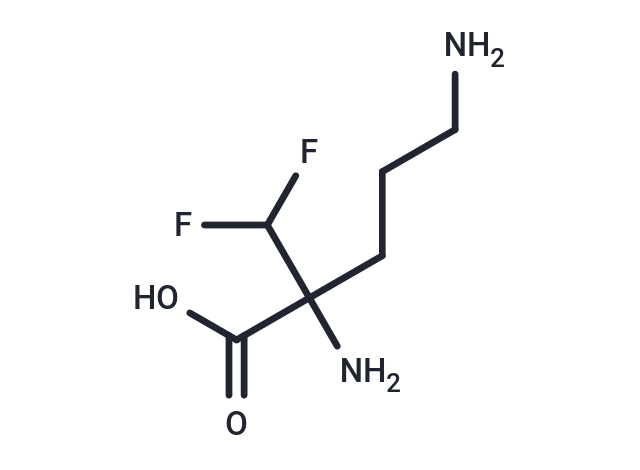
Eflornithine
CAS No. 70052-12-9
Eflornithine( —— )
Catalog No. M35228 CAS No. 70052-12-9
Eflornithine (DFMO) is a selective and orally available ornithine decarboxylase inhibitor that delays hair overgrowth.Eflornithine is used in the study of African trypanosomiasis, malignant glioma, and sleeping sickness.
Purity : >98% (HPLC)
 COA
Datasheet
HNMR
HPLC
MSDS
Handing Instructions
COA
Datasheet
HNMR
HPLC
MSDS
Handing Instructions
| Size | Price / USD | Stock | Quantity |
| 50MG | 29 | In Stock |


|
| 100MG | Get Quote | In Stock |
|
| 200MG | Get Quote | In Stock |
|
| 500MG | Get Quote | In Stock |
|
| 1G | Get Quote | In Stock |
|
Biological Information
-
Product NameEflornithine
-
NoteResearch use only, not for human use.
-
Brief DescriptionEflornithine (DFMO) is a selective and orally available ornithine decarboxylase inhibitor that delays hair overgrowth.Eflornithine is used in the study of African trypanosomiasis, malignant glioma, and sleeping sickness.
-
DescriptionEflornithine is a specific, irreversible inhibitor of the enzyme ornithine decarboxylase. Eflornithine is a medication for the treatment of African trypanosomiasis and excessive facial hair growth in women.
-
In Vitro——
-
In VivoEflornithine is the only new molecule registered for the treatment of human African trypanosomiasis over the last 50 years. It is the drug used mainly as a back-up for melarsoprol refractory Trypanosoma brucei gambiense cases. In subjects with excessive, unwanted facial hair, eflornithine 15% cream is superior to placebo in reducing hair growth. After 24 weeks' treatment, 58% of eflornithine and 34% of placebo subjects have at least some improvement in facial hirsutism. The hair growth inhibitory activity of eflornithine is significantly enhanced when the eflornithine cream is applied onto a mouse skin area pretreated with microneedles. Treatment of coarctation hypertensive rats with eflornithine results in a normalization of the contractile intensity to KCI and norepinephrine and relaxations to acetylcholine by 14 days of hypertension.
-
Synonyms——
-
PathwayMicrobiology/Virology
-
TargetParasite
-
RecptorParasite
-
Research Area——
-
Indication——
Chemical Information
-
CAS Number70052-12-9
-
Formula Weight182.17
-
Molecular FormulaC6H12F2N2O2
-
Purity>98% (HPLC)
-
SolubilityIn Vitro:?H2O : 83.33 mg/mL (457.43 mM; Ultrasonic (<60°C)
-
SMILESO=C(O)C(N)(CCCN)C(F)F
-
Chemical Name——
Shipping & Storage Information
-
Storage(-20℃)
-
ShippingWith Ice Pack
-
Stability≥ 2 years
Reference
1. Burri C, et al. Eflornithine for the treatment of human African trypanosomiasis. Parasitol Res. 2003 Jun;90 Supp 1:S49-52.?
molnova catalog



related products
-
Propargite
Propargite is a pesticide used to kill mites. Propargite induces β-cell necrosis preceded by DNA damage. Propargite induces MIN6 cell death with an IC 50 of 1 μM.
-
DDD107498
DDD107498 has a potent and novel spectrum of antimalarial activity against multiple life-cycle stages of the Plasmodium parasite. It targets translation elongation factor 2 (eEF2).
-
Febantel
Febantel is an anthelmintic. It is used for veterinary use on dogs, cats, cattle, sheep, goats, pig, and poultry against roundworms and tapeworms.
