


 Cart
Cart
 sales@molnova.com



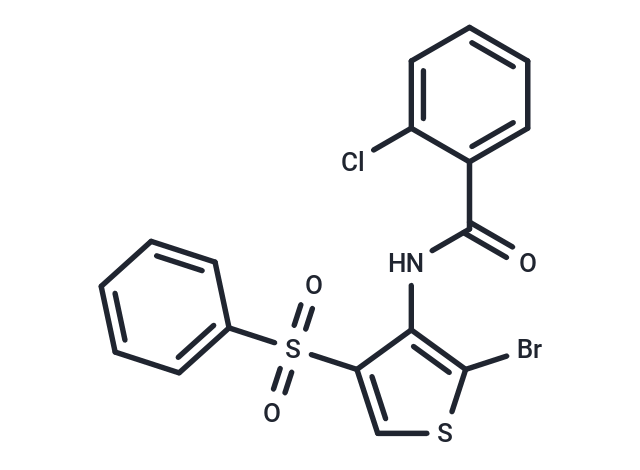
BNTA
CAS No. 685119-25-9
BNTA( —— )
Catalog No. M35227 CAS No. 685119-25-9
BNTA is a potent extracellular matrix (ECM) modulator. In a rat model of arthritis, BNTA modulates arthritis by promoting the synthesis of cartilage structural molecules on chondrocytes through the induction of superoxide dismutase 3 (SOD3) and regulating chondrogenesis through superoxide anion elimination.
Purity : >98% (HPLC)
 COA
Datasheet
HNMR
HPLC
MSDS
Handing Instructions
COA
Datasheet
HNMR
HPLC
MSDS
Handing Instructions
| Size | Price / USD | Stock | Quantity |
| 1 mL x 10 mM in DMSO | 188 | In Stock |


|
| 5MG | 188 | In Stock |
|
| 10MG | 312 | In Stock |
|
| 25MG | 605 | In Stock |
|
| 50MG | 830 | In Stock |
|
| 100MG | 1135 | In Stock |
|
| 200MG | Get Quote | In Stock |
|
| 500MG | 2279 | In Stock |
|
| 1G | Get Quote | In Stock |
|
Biological Information
-
Product NameBNTA
-
NoteResearch use only, not for human use.
-
Brief DescriptionBNTA is a potent extracellular matrix (ECM) modulator. In a rat model of arthritis, BNTA modulates arthritis by promoting the synthesis of cartilage structural molecules on chondrocytes through the induction of superoxide dismutase 3 (SOD3) and regulating chondrogenesis through superoxide anion elimination.
-
DescriptionBNTA, a potent extracellular matrix (ECM) modulator, facilitates cartilage structural molecule synthesis on chondrocytes by activating superoxide dismutase 3 (SOD3). BNTA shows a promising potential for osteoarthritis alleviation by modulating cartilage generation.
-
In VitroBNTA (0.01-10?μM; 1-7 d) does not decrease cell viability of human osteoarthritis chondrocytes and rat primary chondrocytes.BNTA (0.1 μM; 2 d) increases SOX9 protein markedly.BNTA (0.1 μM; 2 d) remarkably increases the COL2A1 and SOX9 protein levels in IL1β-induced rat OA chondrocytes.BNTA (10 μM; 5 d) increases proteoglycan staining in ATDC5 cells.BNTA (0.01-10?μM; 6 h) upregulates the expression levels of ECM-related genes COL2A1, ACAN, proteoglycan 4 (PRG4), and SRY-box 9 (SOX9) in human OA chondrocytes.BNTA (0.01-10?μM; 6 h) increases Col2a1, Acan, Prg4, and Sox9 mRNA levels, with maximum effects around 0.1?μM in IL1β-induced rat OA chondrocytes.BNTA (0.01-1?μM; 2 or 3 w) enhances anabolism and inhibited inflammatory response in osteoarthritis cartilage explants.Cell Viability Assay Cell Line:Human OA chondrocytes Concentration:0.01, 0.1, 1, 10 μM Incubation Time:1, 3, 5, 7 d Result:No toxicity was observed.Western Blot Analysis Cell Line:Human OA chondrocytes Concentration:0.1 μM Incubation Time:2 d Result:Elevated SOX9 protein compared with vehicle.
-
In VivoBNTA (0.015-1.5 mg/kg; intra-articular injection; twice a week for 4 and 8 weeks) could attenuate OA progression developed after anterior cruciate ligament transection (ACLT) in rats.Animal Model:Male SD rats weighing 80?g are induced by ACLT Dosage:0.015, 0.15, 1.5 mg/kg Administration:Intra-articular injection; twice a week for 4 and 8 weeks Result:Attenuated post-traumatic osteoarthritis development after intra-articular injection for 4 and 8 weeks and was well tolerated.
-
Synonyms——
-
PathwayOthers
-
TargetOther Targets
-
RecptorReactive Oxygen Species
-
Research Area——
-
Indication——
Chemical Information
-
CAS Number685119-25-9
-
Formula Weight456.76
-
Molecular FormulaC17H11BrClNO3S2
-
Purity>98% (HPLC)
-
SolubilityIn Vitro:?DMSO : 100 mg/mL (218.93 mM; Ultrasonic )
-
SMILESClc1ccccc1C(=O)Nc1c(Br)scc1S(=O)(=O)c1ccccc1
-
Chemical Name——
Shipping & Storage Information
-
Storage(-20℃)
-
ShippingWith Ice Pack
-
Stability≥ 2 years
Reference
1. Shi Y, et, al. A small molecule promotes cartilage extracellular matrix generation and inhibits osteoarthritis development. Nat Commun. 2019 Apr 23; 10(1): 1914.?
molnova catalog



related products
-
Equol b
Equol b
-
Gastric Inhibitory P...
Gastric Inhibitory Polypeptide (3-42) (human)
-
Substance P (6-11)/H...
Substance P (6-11) is the C-terminal hexapeptideamide of Substance P (Substance P ).Substance P (6-11) binds to NK-1 tachykinin receptor. Substance P (6-11) shows depolarization of motoneurons and a hypotensive effect.
