


 Cart
Cart
 sales@molnova.com



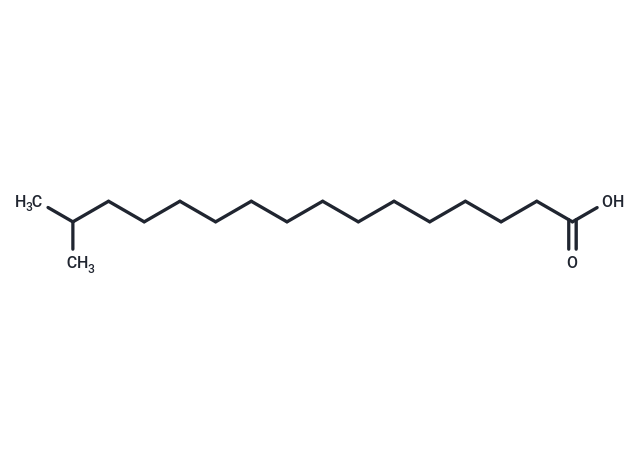
15-Methyl Palmitic Acid
CAS No. 1603-03-8
15-Methyl Palmitic Acid( —— )
Catalog No. M34995 CAS No. 1603-03-8
15-methyl Palmitic Acid is a methylated fatty acid that is widely found in animal lipids and may be involved in the regulation of fat metabolism.
Purity : >98% (HPLC)
 COA
Datasheet
HNMR
HPLC
MSDS
Handing Instructions
COA
Datasheet
HNMR
HPLC
MSDS
Handing Instructions
| Size | Price / USD | Stock | Quantity |
| 5MG | 143 | Get Quote |


|
| 10MG | 231 | Get Quote |
|
| 25MG | 438 | Get Quote |
|
| 50MG | 814 | Get Quote |
|
| 100MG | Get Quote | Get Quote |
|
| 200MG | Get Quote | Get Quote |
|
| 500MG | Get Quote | Get Quote |
|
| 1G | Get Quote | Get Quote |
|
Biological Information
-
Product Name15-Methyl Palmitic Acid
-
NoteResearch use only, not for human use.
-
Brief Description15-methyl Palmitic Acid is a methylated fatty acid that is widely found in animal lipids and may be involved in the regulation of fat metabolism.
-
Description15-Methylpalmitic acid is a biochemical reagent that can be used as a biological material or organic compound for life science related research.
-
In Vitro——
-
In Vivo——
-
Synonyms——
-
PathwayOthers
-
TargetOther Targets
-
RecptorOthers
-
Research Area——
-
Indication——
Chemical Information
-
CAS Number1603-03-8
-
Formula Weight270.45
-
Molecular FormulaC17H34O2
-
Purity>98% (HPLC)
-
Solubility——
-
SMILESC(CC(C)C)CCCCCCCCCCCC(O)=O
-
Chemical Name——
Shipping & Storage Information
-
Storage(-20℃)
-
ShippingWith Ice Pack
-
Stability≥ 2 years
Reference
molnova catalog



related products
-
3,6-Disinapoylsucros...
3,6-Disinapoylsucrose
-
9H-Carbazole, 1-meth...
9H-Carbazole, 1-methyl- is a marine derived natural products found in Tedania (Tedania) ignis.
-
Crotonic acid
Crotonic acid is fatty acid formed by the action of fatty acid synthases from acetyl-CoA and malonyl-CoA precursors. It is involved in the fatty acid biosynthesis. It is also found in water extracts from carrot seeds (Daucus carota L.).
