


 Cart
Cart
 sales@molnova.com



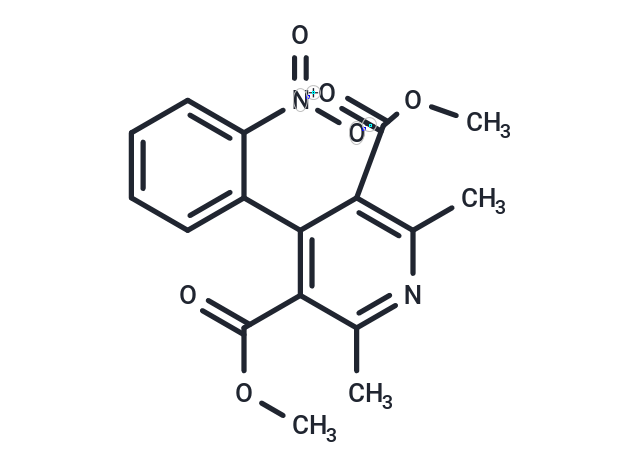
Dehydro Nifedipine
CAS No. 67035-22-7
Dehydro Nifedipine( —— )
Catalog No. M34871 CAS No. 67035-22-7
Dehydro Nifedipine (BAY-b 4759) is the main metabolite of nifedipine in human plasma.
Purity : >98% (HPLC)
 COA
Datasheet
HNMR
HPLC
MSDS
Handing Instructions
COA
Datasheet
HNMR
HPLC
MSDS
Handing Instructions
| Size | Price / USD | Stock | Quantity |
| 5MG | 38 | In Stock |


|
| 10MG | 61 | In Stock |
|
| 25MG | 123 | In Stock |
|
| 50MG | 193 | In Stock |
|
| 100MG | 310 | In Stock |
|
| 200MG | 463 | In Stock |
|
| 500MG | Get Quote | In Stock |
|
| 1G | Get Quote | In Stock |
|
Biological Information
-
Product NameDehydro Nifedipine
-
NoteResearch use only, not for human use.
-
Brief DescriptionDehydro Nifedipine (BAY-b 4759) is the main metabolite of nifedipine in human plasma.
-
DescriptionDehydro Nifedipine (BAY-b 4759) is the main metabolite of nifedipine in human plasma. Dehydro Nifedipine inhibits glucose uptake in PC-12 cells with an IC50 value of 130 μM. Nifedipine is a calcium channel blocker used in the treatment of hypertension and angina. Dehydronifedipine is formed when it is metabolized by cytochrome P450 (CYP) isomers CYP3A4 and CYP3A5.
-
In Vitro——
-
In Vivo——
-
Synonyms——
-
PathwayOthers
-
TargetOther Targets
-
RecptorDrug Metabolite
-
Research Area——
-
Indication——
Chemical Information
-
CAS Number67035-22-7
-
Formula Weight344.32
-
Molecular FormulaC17H16N2O6
-
Purity>98% (HPLC)
-
Solubility——
-
SMILESCOC(=O)c1c(C)nc(C)c(C(=O)OC)c1-c1ccccc1[N+]([O-])=O
-
Chemical Name——
Shipping & Storage Information
-
Storage(-20℃)
-
ShippingWith Ice Pack
-
Stability≥ 2 years
Reference
molnova catalog



related products
-
Dodecyl isobutyrate
Dodecyl isobutyrate (Dodecyl 2-methylpropanoate) is a compound found in Jatropha curcas that causes an escape reaction in thrips.
-
O-Propargyl-Puromyci...
O-Propargyl-Puromycin (OP-puro) is a potent protein synthesis inhibitor, a puromycin acetylene analog.
-
HQL-79
HQL-79, a potent, selective and orally active human hematopoietic prostaglandin D synthase (H-PGDS) inhibitor, highly selectively inhibits the synthesis of PGD2, and acts as an anti-allergic agent, with a Kd of 0.8 μM and an IC50 of 6 μM. Shows no obvious effect on COX-1, COX-2, m-PGES, or L-PGDS.
