


 Cart
Cart
 sales@molnova.com



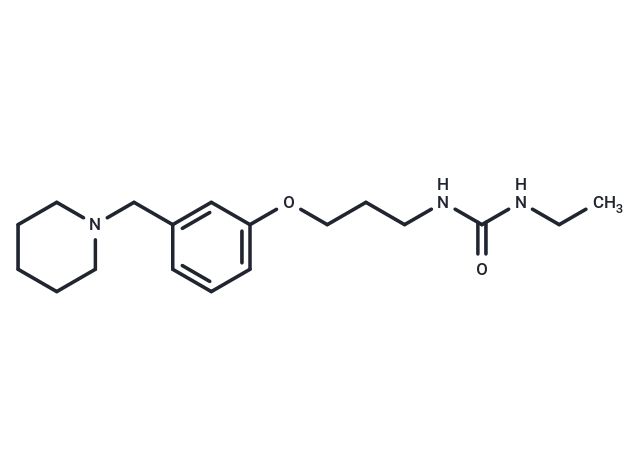
Dalcotidine
CAS No. 120958-90-9
Dalcotidine( —— )
Catalog No. M34564 CAS No. 120958-90-9
Dalcotidine (KU 1257) is a novel histamine H2 receptor antagonist with histamine H9 receptor antagonistic activity and antisecretory effects.
Purity : >98% (HPLC)
 COA
Datasheet
HNMR
HPLC
MSDS
Handing Instructions
COA
Datasheet
HNMR
HPLC
MSDS
Handing Instructions
| Size | Price / USD | Stock | Quantity |
| 1 mL x 10 mM in DMSO | 143 | In Stock |


|
| 5MG | 143 | In Stock |
|
| 10MG | 212 | In Stock |
|
| 25MG | 343 | In Stock |
|
| 50MG | 486 | In Stock |
|
| 100MG | 684 | In Stock |
|
| 200MG | 923 | In Stock |
|
| 500MG | Get Quote | In Stock |
|
| 1G | Get Quote | In Stock |
|
Biological Information
-
Product NameDalcotidine
-
NoteResearch use only, not for human use.
-
Brief DescriptionDalcotidine (KU 1257) is a novel histamine H2 receptor antagonist with histamine H9 receptor antagonistic activity and antisecretory effects.
-
DescriptionDalcotidine (KU 1257) is a novel histamine H2 receptor antagonist with histamine H9 receptor antagonistic activity and antisecretory effects.The Ki value for binding to guinea pig cerebral cortex was 0.040 The KB value for antagonism of histamine-induced positive chronotropic responses in the right atrium of isolate guinea pigs was 0.041.Dalcotidine improves the quality of ulcer healing, and may contribute to a reduction in ulcer recurrence and relapse rates.
-
In Vitro——
-
In Vivo——
-
Synonyms——
-
PathwayGPCR/G Protein
-
TargetHistamine Receptor
-
RecptorHistamine Receptor
-
Research Area——
-
Indication——
Chemical Information
-
CAS Number120958-90-9
-
Formula Weight319.44
-
Molecular FormulaC18H29N3O2
-
Purity>98% (HPLC)
-
Solubility——
-
SMILESC(C1=CC(OCCCNC(NCC)=O)=CC=C1)N2CCCCC2
-
Chemical Name——
Shipping & Storage Information
-
Storage(-20℃)
-
ShippingWith Ice Pack
-
Stability≥ 2 years
Reference
molnova catalog



related products
-
JNJ 39220675
JNJ 39220675 is potent and selective, brain penetrant H3 antagonist with Ki of 1.4 nM, pA2 of 9.42 for hH3.
-
Pyrilamine maleate
A histamine H1 antagonist. It has mild hypnotic properties and some local anesthetic action and is used for allergies (including skin eruptions) both parenterally and locally.
-
Cetirizine Impurity ...
Cetirizine Impurity B dihydrochloride is an impurity of Cetirizine dihydrochloride.
