


 Cart
Cart
 sales@molnova.com



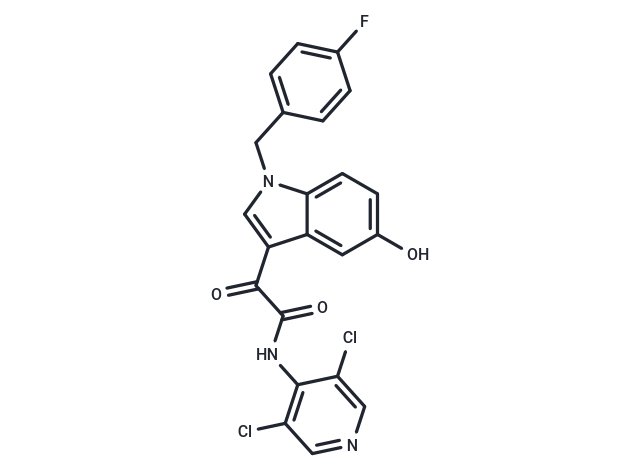
AWD 12-281
CAS No. 257892-33-4
AWD 12-281( —— )
Catalog No. M34515 CAS No. 257892-33-4
AWD 12-281 is a selective phosphodiesterase 4 (PDE4) inhibitor with anti-inflammatory and bronchodilator activity used in the study of chronic obstructive pulmonary disease (COPD).
Purity : >98% (HPLC)
 COA
Datasheet
HNMR
HPLC
MSDS
Handing Instructions
COA
Datasheet
HNMR
HPLC
MSDS
Handing Instructions
| Size | Price / USD | Stock | Quantity |
| 5MG | 686 | In Stock |


|
| 10MG | 938 | In Stock |
|
| 25MG | 1444 | In Stock |
|
| 50MG | 1841 | In Stock |
|
| 100MG | Get Quote | In Stock |
|
| 200MG | Get Quote | In Stock |
|
| 500MG | Get Quote | In Stock |
|
| 1G | Get Quote | In Stock |
|
Biological Information
-
Product NameAWD 12-281
-
NoteResearch use only, not for human use.
-
Brief DescriptionAWD 12-281 is a selective phosphodiesterase 4 (PDE4) inhibitor with anti-inflammatory and bronchodilator activity used in the study of chronic obstructive pulmonary disease (COPD).
-
DescriptionAWD 12-281 is a selective phosphodiesterase 4 (PDE4) inhibitor with anti-inflammatory and bronchodilator activity used in the study of chronic obstructive pulmonary disease (COPD).
-
In Vitro——
-
In Vivo——
-
Synonyms——
-
PathwayAngiogenesis
-
TargetPDE
-
RecptorPDE
-
Research Area——
-
Indication——
Chemical Information
-
CAS Number257892-33-4
-
Formula Weight458.27
-
Molecular FormulaC22H14Cl2FN3O3
-
Purity>98% (HPLC)
-
Solubility——
-
SMILESO=C(NC=1C(Cl)=CN=CC1Cl)C(=O)C2=CN(C=3C=CC(O)=CC23)CC4=CC=C(F)C=C4
-
Chemical Name——
Shipping & Storage Information
-
Storage(-20℃)
-
ShippingWith Ice Pack
-
Stability≥ 2 years
Reference
molnova catalog



related products
-
Cilostazol
Cilostazol (OPC 13013, OPC 21) is a potent inhibitor of PDE3A with IC50 of 0.2 uM; inhibits platelet aggregation and has considerable antithrombotic effects in vivo.
-
N-Ethyl tadalafil
N-Ethyl tadalafil (NEthyl tadalafil) is a CGMP-specific 3',5'-cyclic phosphodiesterase (PDE) inhibitor used in the study of cardiovascular diseases such as angina pectoris, hypertension, and pulmonary hypertension.
-
Parogrelil Free Base
Parogrelil Free Base (NM-702 Free Base) is a selective phosphodiesterase 3 inhibitor with bronchodilatory and anti-inflammatory effects, inhibits leukotriene (LT)D(4) and histamine-induced constriction of isolated guinea pig tracheal strips, and can be used in the study of bronchial asthma.
