


 Cart
Cart
 sales@molnova.com



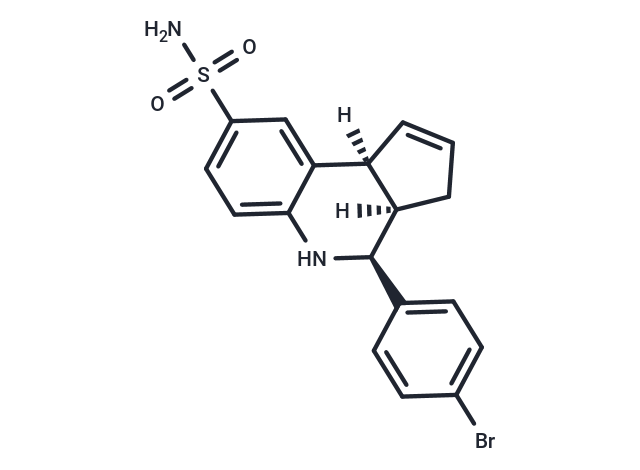
GAT107
CAS No. 1476807-74-5
GAT107( —— )
Catalog No. M34264 CAS No. 1476807-74-5
GAT107 is a novel and potent α7 nicotinic cholinergic receptor modifier agonist and modulator with anti-inflammatory activity that reverses injury perception in a mouse model of neuropathic pain.
Purity : >98% (HPLC)
 COA
Datasheet
HNMR
HPLC
MSDS
Handing Instructions
COA
Datasheet
HNMR
HPLC
MSDS
Handing Instructions
| Size | Price / USD | Stock | Quantity |
| 5MG | 366 | In Stock |


|
| 10MG | 521 | In Stock |
|
| 25MG | 781 | In Stock |
|
| 100MG | Get Quote | In Stock |
|
| 200MG | Get Quote | In Stock |
|
| 500MG | Get Quote | In Stock |
|
| 1G | Get Quote | In Stock |
|
Biological Information
-
Product NameGAT107
-
NoteResearch use only, not for human use.
-
Brief DescriptionGAT107 is a novel and potent α7 nicotinic cholinergic receptor modifier agonist and modulator with anti-inflammatory activity that reverses injury perception in a mouse model of neuropathic pain.
-
DescriptionGAT107 is a novel and potent α7 nicotinic cholinergic receptor modifier agonist and modulator with anti-inflammatory activity that reverses injury perception in a mouse model of neuropathic pain.
-
In Vitro——
-
In Vivo——
-
Synonyms——
-
PathwayCell Cycle/DNA Damage
-
TargetAChR
-
RecptorAChR
-
Research Area——
-
Indication——
Chemical Information
-
CAS Number1476807-74-5
-
Formula Weight405.31
-
Molecular FormulaC18H17BrN2O2S
-
Purity>98% (HPLC)
-
Solubility——
-
SMILESS(N)(=O)(=O)C=1C=C2[C@@]3([C@]([C@H](NC2=CC1)C4=CC=C(Br)C=C4)(CC=C3)[H])[H]
-
Chemical Name——
Shipping & Storage Information
-
Storage(-20℃)
-
ShippingWith Ice Pack
-
Stability≥ 2 years
Reference
molnova catalog



related products
-
LY2033298
LY2033298, a positive allosteric modulator of muscarine M4 receptor, enhances the inhibitory effect of oximoline on light-induced phase shift in circadian activity in hamsters and can be used in neurosystem-related diseases.
-
8-Aminoadenine
8-Aminoadenine (7H-purine-6,8-diamine) is a ligand for Adenine Receptor with Ki of 0.0341 μM.
-
SIB-1553A hydrochlor...
SIB-1553A hydrochloride is an orally available, selective nicotinic acetylcholine receptor agonist and a selective neuronal nAChR ligand.
