


 Cart
Cart
 sales@molnova.com



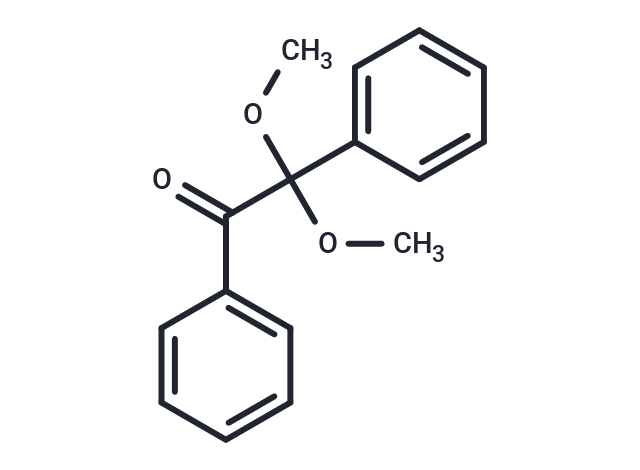
CES1-IN-42
CAS No. 24650-42-8
CES1-IN-42( —— )
Catalog No. M33702 CAS No. 24650-42-8
CES1-IN-42 (2,2-Dimethoxy-2-phenylacetophenone) is a photoinitiator that can be used to assist in cancer research.
Purity : >98% (HPLC)
 COA
Datasheet
HNMR
HPLC
MSDS
Handing Instructions
COA
Datasheet
HNMR
HPLC
MSDS
Handing Instructions
| Size | Price / USD | Stock | Quantity |
| 100MG | 27 | In Stock |


|
| 200MG | Get Quote | In Stock |
|
| 500MG | Get Quote | In Stock |
|
| 1G | Get Quote | In Stock |
|
Biological Information
-
Product NameCES1-IN-42
-
NoteResearch use only, not for human use.
-
Brief DescriptionCES1-IN-42 (2,2-Dimethoxy-2-phenylacetophenone) is a photoinitiator that can be used to assist in cancer research.
-
DescriptionCES1-IN-42 (2,2-Dimethoxy-2-phenylacetophenone) is a photoinitiator that can be used to assist in cancer research.
-
In Vitro——
-
In Vivo——
-
Synonyms——
-
PathwayOthers
-
TargetOther Targets
-
RecptorOthers
-
Research Area——
-
Indication——
Chemical Information
-
CAS Number24650-42-8
-
Formula Weight256.3
-
Molecular FormulaC16H16O3
-
Purity>98% (HPLC)
-
Solubility——
-
SMILESCOC(OC)(C(=O)c1ccccc1)c1ccccc1
-
Chemical Name——
Shipping & Storage Information
-
Storage(-20℃)
-
ShippingWith Ice Pack
-
Stability≥ 2 years
Reference
molnova catalog



related products
-
DL-5-Hydroxylysine h...
DL-5-Hydroxylysine is a racemic mixture of D- and L- enantiomers of 5-hydroxylysine which may be used as potential target markers for radical-induced protein oxidation.
-
Resinacein L
Resinacein L is an inhibitor for α-glucosidase with an IC50 of 0.635 mM. Resinacein L slows down the digestion and absorption of carbohydrates, thereby decreasing postprandial blood glucose.
-
Ataquimas
Ataquimast inhibits IL-5 secretion along with that of TNF-a, IL-4 and GM-CSF from human cells.
