


 Cart
Cart
 sales@molnova.com



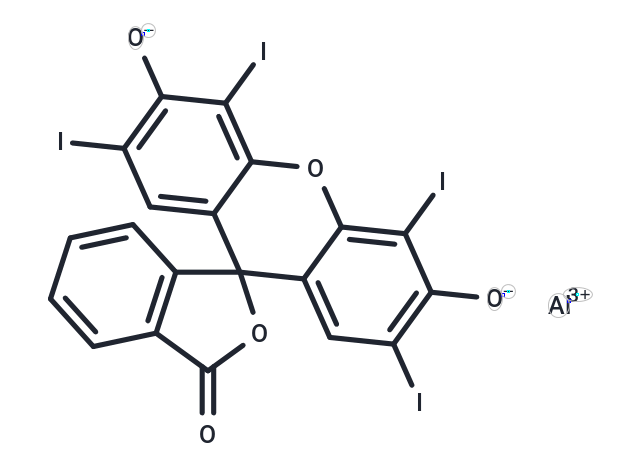
C.I. Pigment Red 172
CAS No. 12227-78-0
C.I. Pigment Red 172( —— )
Catalog No. M33651 CAS No. 12227-78-0
C.I. Pigment Red 172 (C.I. Food Red 14:1) is a food additive.
Purity : >98% (HPLC)
 COA
Datasheet
HNMR
HPLC
MSDS
Handing Instructions
COA
Datasheet
HNMR
HPLC
MSDS
Handing Instructions
| Size | Price / USD | Stock | Quantity |
| 5MG | 113 | In Stock |


|
| 10MG | 170 | In Stock |
|
| 25MG | 278 | In Stock |
|
| 50MG | 416 | In Stock |
|
| 100MG | 609 | In Stock |
|
| 200MG | Get Quote | In Stock |
|
| 500MG | 1283 | In Stock |
|
| 1G | Get Quote | In Stock |
|
Biological Information
-
Product NameC.I. Pigment Red 172
-
NoteResearch use only, not for human use.
-
Brief DescriptionC.I. Pigment Red 172 (C.I. Food Red 14:1) is a food additive.
-
DescriptionC.I. Pigment Red 172 (C.I. Food Red 14:1) is a food additive.
-
In Vitro——
-
In Vivo——
-
Synonyms——
-
PathwayOthers
-
TargetOther Targets
-
RecptorOthers
-
Research Area——
-
Indication——
Chemical Information
-
CAS Number12227-78-0
-
Formula Weight851.86
-
Molecular FormulaC20H6I4O5.2/3Al
-
Purity>98% (HPLC)
-
Solubility——
-
SMILESO=C1OC2(C3=CC(I)=C(C(I)=C3OC4=C(C([O-])=C(C=C42)I)I)[O-])C5=C1C=CC=C5.[Al+3] 2/3 Aluminum
-
Chemical Name——
Shipping & Storage Information
-
Storage(-20℃)
-
ShippingWith Ice Pack
-
Stability≥ 2 years
Reference
molnova catalog



related products
-
Feprazone
Feprazone possesses anti-inflammatory and antiadipogenic properties. Feprazone can be used in studies about the treatment of joint and muscular pain.
-
Rabdophyllin G
Rabdosin C is an antineoplastic isolated from the leaves of Rabdosia japonic.
-
Progoitrin
Progoitrin is a biochemical from the glucosinolate family that is found in some food, which is inactive but after ingestion is converted to goitrin.
