


 Cart
 sales@molnova.com




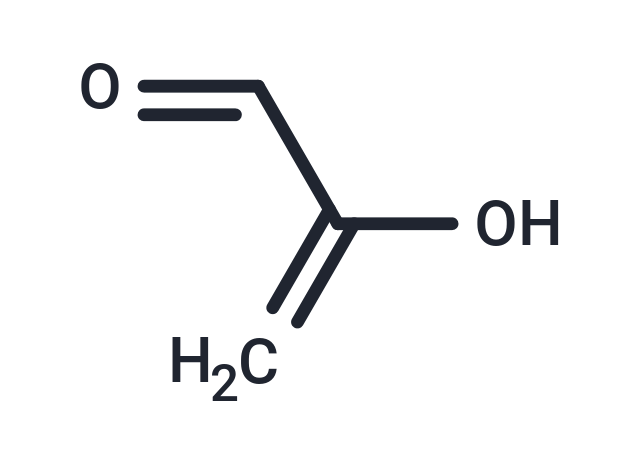
Pyruvic aldehyde
CAS No. 78-98-8
Pyruvic aldehyde( —— )
Catalog No. M33619 CAS No. 78-98-8
Pyruvic aldehyde (2-Oxopropanal) is a highly reactive dicarbonyl compound that can be converted to lactic acid by evolution from DHA and GLA.
Purity : >98% (HPLC)
 COA
Datasheet
HNMR
HPLC
MSDS
Handing Instructions
| Size | Price / USD | Stock | Quantity |
| 100MG | 28 | In Stock |


|
| 200MG | Get Quote | In Stock |
|
| 500MG | 54 | In Stock |
|
| 1G | 90 | In Stock |
|
Biological Information
-
Product NamePyruvic aldehyde
-
NoteResearch use only, not for human use.
-
Brief DescriptionPyruvic aldehyde (2-Oxopropanal) is a highly reactive dicarbonyl compound that can be converted to lactic acid by evolution from DHA and GLA.
-
DescriptionPyruvic aldehyde is often used as a reagent in organic synthesis, as a flavoring agent, and in tanning.
-
In Vitro——
-
In Vivo——
-
Synonyms——
-
PathwayOthers
-
TargetOther Targets
-
RecptorOthers
-
Research Area——
-
Indication——
Chemical Information
-
CAS Number78-98-8
-
Formula Weight72.06
-
Molecular FormulaC3H4O2
-
Purity>98% (HPLC)
-
Solubility——
-
SMILESOC(=C)C=O
-
Chemical Name——
Shipping & Storage Information
-
Storage(-20℃)
-
ShippingWith Ice Pack
-
Stability≥ 2 years
Reference
molnova catalog


related products
-
Adropin (34-76) (hum...
Adropin (34-76) (human, mouse, rat) is a peptide that attenuates liver fibrosis and insulin resistance independent of obesity or food intake.
-
β-CGRP, human
β-CGRP, human ,a 37-amino acid peptide,is the beta form of Calcitonin-gene-related peptide (β-CGRP), involved extensively in regulation of the cardiovascular and nervous systems. β-CGRP contains a disulphide bridge at the N-terminus, a C-terminal phenylalanine amide important for immune recognition, and an a-helix between residues 8 and 18.
-
2,4,5-Trichlorobenze...
2,4,5-Trichlorobenzenesulfonyl chloride (TCBSC) is a versatile building block in the synthesis of various organic compounds, such as amines, alcohols, and carboxylic acids.
