


 Cart
Cart
 sales@molnova.com



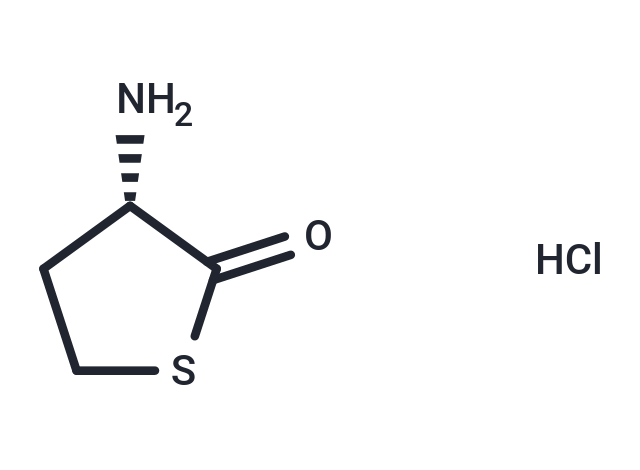
L-Homocysteine thiolactone hydrochloride
CAS No. 31828-68-9
L-Homocysteine thiolactone hydrochloride( —— )
Catalog No. M33607 CAS No. 31828-68-9
L-Homocysteine thiolactone hydrochloride is neurotoxic and can induce epilepsy and Alzheimer's disease.
Purity : >98% (HPLC)
 COA
Datasheet
HNMR
HPLC
MSDS
Handing Instructions
COA
Datasheet
HNMR
HPLC
MSDS
Handing Instructions
| Size | Price / USD | Stock | Quantity |
| 25MG | 42 | In Stock |


|
| 50MG | 59 | In Stock |
|
| 100MG | 83 | In Stock |
|
| 200MG | 120 | In Stock |
|
| 500MG | Get Quote | In Stock |
|
| 1G | Get Quote | In Stock |
|
Biological Information
-
Product NameL-Homocysteine thiolactone hydrochloride
-
NoteResearch use only, not for human use.
-
Brief DescriptionL-Homocysteine thiolactone hydrochloride is neurotoxic and can induce epilepsy and Alzheimer's disease.
-
DescriptionL-Homocysteine thiolactone hydrochloride is an intramolecular thioester of homocysteine; prevents translational incorporation of homocysteine into proteins.
-
In VitroIn all cell types, from bacterial to human, homocysteine is metabolized to homocysteine thiolactone by methionyl-tRNA synthetase. Elevated levels of homocysteine are an independent risk factor for cardiovascular disease in humans. Homocysteine can be harmful to human cells because of its metabolic conversion to homocysteine thiolactone, a reactive thioester. This conversion occurs in all human cell types, including endothelial cells. Homocysteine thiolactone induces cell death and features of apoptosis including increased phosphotidylserine exposure on the membrane surface, increased apoptotic cells with hypoploid DNA contents, and internucleosomal DNA fragmentation in HL-60 cells. Homocysteine thiolactone is cytotoxic and capable of promoting cell death, as measured by caspase-3 activation and DNA fragmentation. HcyT strongly activates IL-8 release.
-
In VivoHomocysteine thiolactone is toxic, induces epileptic seizures in rodents, and has been implicated in Alzheimer’s disease. Homocysteine thiolactone induces two types of seizures, the coexistence of convulsive and nonconvulsive epilepsy. The grade of seizures is dose dependent.
-
Synonyms——
-
PathwayOthers
-
TargetOther Targets
-
RecptorOthers
-
Research Area——
-
Indication——
Chemical Information
-
CAS Number31828-68-9
-
Formula Weight153.63
-
Molecular FormulaC4H8ClNOS
-
Purity>98% (HPLC)
-
SolubilityIn Vitro:?H2O : ≥ 23 mg/mL (149.71 mM)* "≥" means soluble, but saturation unknown.
-
SMILESN[C@@H]1C(=O)SCC1.Cl
-
Chemical Name——
Shipping & Storage Information
-
Storage(-20℃)
-
ShippingWith Ice Pack
-
Stability≥ 2 years
Reference



-
5-(2-Furyl)-2-hydrox...
5-(2-Furyl)-2-hydroxybenzoic acid is an inhibitor of glycolate oxidase (GO) and can be used to study metabolism-related disorders such as primary hyperoxaluria type 1 (PH1).
-
Andrographidine C
Andrographidine C is a natural product of Andrographis, Acanthaceae. Andrographidine C can be used as a reference standard.
-
HLM006474
HLM006474 is a pan inhibitor of E2F. This inhibits E2F4 DNA-binding (IC50: 29.8 μM in A375 cells).HLM006474 causes the viability of both SCLC and NSCLC lines (IC50 ranging from 15 to 75 μM). HLM006474 displays little activities against E2F4 DNA-binding in A375 cells at 10 and 20 μM, apparently inhibits E2F4 DNA-binding at 40 μM, and increasingly suppresses the effect at 60 and 80 μM concentrations.
