


 Cart
 sales@molnova.com




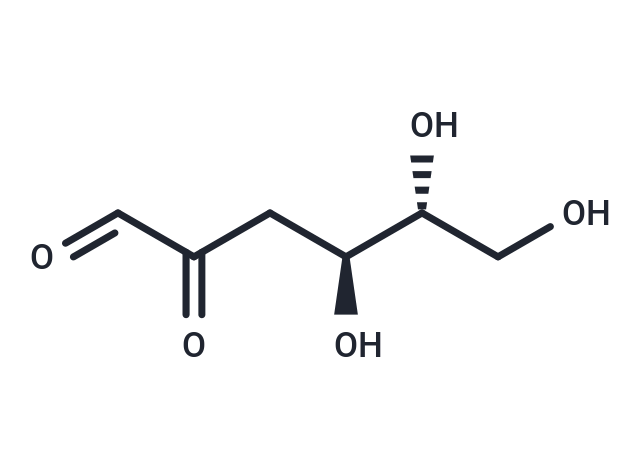
3-Deoxyglucosone
CAS No. 4084-27-9
3-Deoxyglucosone( —— )
Catalog No. M33580 CAS No. 4084-27-9
3-Deoxyglucosone(3-Deoxy-D-glucosone) is synthesized by the intermediate pathway of the melad and polyol reactions.
Purity : >98% (HPLC)
 COA
Datasheet
HNMR
HPLC
MSDS
Handing Instructions
| Size | Price / USD | Stock | Quantity |
| 2MG | 286 | In Stock |


|
| 5MG | 454 | In Stock |
|
| 100MG | Get Quote | In Stock |
|
| 200MG | Get Quote | In Stock |
|
| 500MG | Get Quote | In Stock |
|
| 1G | Get Quote | In Stock |
|
Biological Information
-
Product Name3-Deoxyglucosone
-
NoteResearch use only, not for human use.
-
Brief Description3-Deoxyglucosone(3-Deoxy-D-glucosone) is synthesized by the intermediate pathway of the melad and polyol reactions.
-
Description3-Deoxyglucosone (3-Deoxy-D-glucosone) is a reactive intermediate of the Maillard reaction and the polyol pathway. 3-Deoxyglucosone rapidly reacts with protein amino groups to form advanced glycation end products (AGEs), such as imidazolone, it is the most specific AGE for 3-DG. 3-Deoxyglucosone synergizes with low glucose to potentiate GLP-1 secretion and is considered as a biomarker for diabetes.
-
In Vitro3-Deoxyglucosone (80 ng/ml-1000 ng/ml; 1 hour) markedly increases GLP-1 secretion by 1.23-folds in 300?ng/ml or 1000?ng/ml 3DG-treated group. But at alower concentration (80?ng/ml) has no effects.3-Deoxyglucosone (300 ng/ml; 1 hour) dramatically increases intracellular Ca2+ levels by Fluo-3/AM determination (2.5?μM for 30 mins). But 3DG does not affect intracellular cAMP levels in a cAMP Elisa assay.3-Deoxyglucosone (300 ng/ml; 1 hour) significantly increases the protein expression levels of TAS1R2, TAS1R3, and TRPM5 under both glucose-free and highconditions.Western Blot Analysis Cell Line:STC-1 cells Concentration:300?ng/ml Incubation Time:1 hour Result:Upregulated TAS1R2, TAS1R3, and TRPM5 expression.
-
In Vivo3-Deoxyglucosone (intragastric administration; 20 mg/kg; single dose)?impairs glucose tolerance with increased AUC, but the plasma glucagon levels are not significantly different. It developes impaired glucose regulation (IGR) with obviously pancreatic islet cell dysfunction in kunming mice and SD-rats.3-deoxyglucosone?(gastric gavage; 5-50 mg/kg; once daily; 2 weeks) is significantly increased in the upper small intestine (1.4-fold), lower small intestine (1.4-fold), ileum (1.4-fold) and colon (two fold) compared with the basal levels in the corresponding control group. In addition, the protein expressions of TAS1R2, TAS1R3 and TRPM5 in both duodenum and colon are significantly decreased.Animal Model:SD rats Dosage:5, 20 and 50 mg/kg Administration:oral administration; once daily; 2 weeks Result:Was capable of accumulating in?intestinal?tissue?and thereby decreased?secretion?of?GLP-1?and insulin. ?
-
Synonyms——
-
PathwayOthers
-
TargetOther Targets
-
RecptorGPX | Glucagon Receptor
-
Research Area——
-
Indication——
Chemical Information
-
CAS Number4084-27-9
-
Formula Weight162.14
-
Molecular FormulaC6H10O5
-
Purity>98% (HPLC)
-
Solubility——
-
SMILES[C@H](CC(C=O)=O)([C@@H](CO)O)O
-
Chemical Name——
Shipping & Storage Information
-
Storage(-20℃)
-
ShippingWith Ice Pack
-
Stability≥ 2 years
Reference
1. Song X, et al. 3-Deoxyglucosone Induces Glucagon-Like Peptide-1 Secretion from STC-1 Cells via Upregulating Sweet Taste Receptor Expression under Basal Conditions.Int J Endocrinol.?2019?Oct 23;2019:4959646.?
molnova catalog



related products
-
β-Endorphin (30-31) ...
Glycyl-L-glutamic acid is a neurotrophic factor (NF) in vivo, and exerts function of maintenance of AChE content and activity. Glycyl-L-glutamic acid doesn’t act directly on AChE synthesis, and may prevent preganglionic neuronal degeneration.
-
UNC8153 TFA
UNC8153 TFA is a selective and potent NSD2 protein degrader with anticancer activity.UNC8153 TFA induces NSD2 degradation in MM.1S multiple myeloma cells and inhibits the proliferation of MM.1S cells.
-
AUNP-12 TFA
AUNP-12 TFA (NP-12 TFA) is a polypeptide antagonist in the pd-1 signaling pathway, which has the same antagonistic effect on pd-l1 and pd-l2, and can protect the proliferation and effector function of lymphocytes.
