


 Cart
Cart
 sales@molnova.com



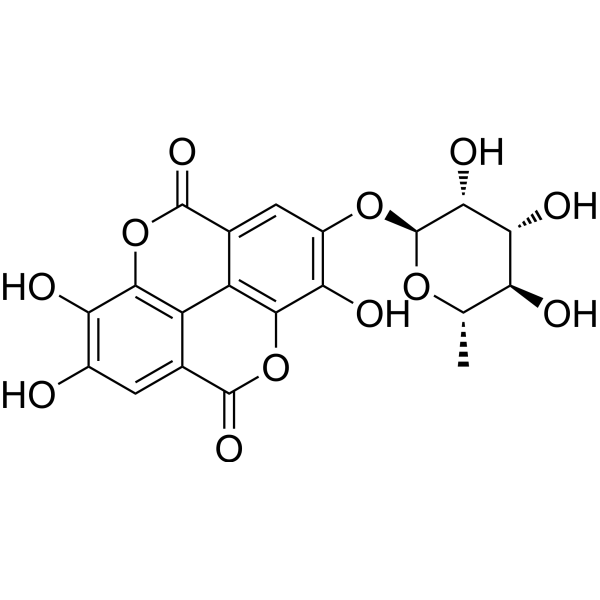
Eschweilenol C
CAS No. 211371-02-7
Eschweilenol C( —— )
Catalog No. M32308 CAS No. 211371-02-7
Eschweilenol C has antifungal, anti-inflammatory, antioxidant, antidiabetic activity.
Purity : >98% (HPLC)
 COA
Datasheet
HNMR
HPLC
MSDS
Handing Instructions
COA
Datasheet
HNMR
HPLC
MSDS
Handing Instructions
| Size | Price / USD | Stock | Quantity |
| 10MG | 551 | In Stock |


|
| 50MG | Get Quote | In Stock |
|
| 100MG | Get Quote | In Stock |
|
| 200MG | Get Quote | In Stock |
|
| 500MG | Get Quote | In Stock |
|
| 1G | Get Quote | In Stock |
|
Biological Information
-
Product NameEschweilenol C
-
NoteResearch use only, not for human use.
-
Brief DescriptionEschweilenol C has antifungal, anti-inflammatory, antioxidant, antidiabetic activity.
-
DescriptionEschweilenol C has antifungal, anti-inflammatory, antioxidant, antidiabetic activity. 4-(alpha-rhamnopyranosyl)ellagic acid is an inhibitor of human recombinant aldose reductase HRAR (IC50 = 4.1 x 10(-8) M).
-
In Vitro——
-
In Vivo——
-
Synonyms——
-
PathwayOthers
-
TargetOther Targets
-
Recptor——
-
Research Area——
-
Indication——
Chemical Information
-
CAS Number211371-02-7
-
Formula Weight448.3
-
Molecular FormulaC20H16O12
-
Purity>98% (HPLC)
-
SolubilityDMSO, Pyridine, Methanol, Ethanol, etc.
-
SMILES——
-
Chemical Name——
Shipping & Storage Information
-
Storage(-20℃)
-
ShippingWith Ice Pack
-
Stability≥ 2 years
Reference
1.Food Chem . 2014 Dec 15;165:140-148.
molnova catalog



related products
-
7-O -Methylaloesinol
7-O-Methylaloesinol is a chromone derivative. 7-O-Methylaloesinol shows significant inhibitory effects against TNFα-induced NF-κB transcriptional activity with an IC50 value of 29.07 μM.
-
TAXUSIN
Taxusin is a natural product form Taxus wallichiana.
-
11(α)-hydroxyNepasai...
11(α)-Hydroxynepasaikosaponin k (compound HOSSc) is a saikosaponin that can be found in B. scorzonerifolium Willd.
