


 Cart
Cart
 sales@molnova.com



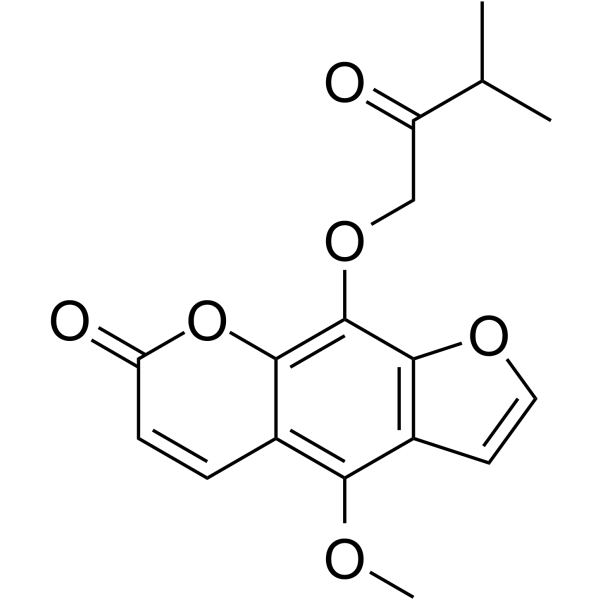
Anhydrobyankangelicin
CAS No. 35214-81-4
Anhydrobyankangelicin( —— )
Catalog No. M32285 CAS No. 35214-81-4
Isobyakangelicol, a coumarin compound present in Angelica dahurica roots, exhibits inhibitory effects on the growth of HeLa and HepG2 cells, with IC50 values of 70.04 μM and 17.97 μM, respectively.
Purity : >98% (HPLC)
 COA
Datasheet
HNMR
HPLC
MSDS
Handing Instructions
COA
Datasheet
HNMR
HPLC
MSDS
Handing Instructions
| Size | Price / USD | Stock | Quantity |
| 5MG | 873 | In Stock |


|
| 50MG | Get Quote | In Stock |
|
| 100MG | Get Quote | In Stock |
|
| 200MG | Get Quote | In Stock |
|
| 500MG | Get Quote | In Stock |
|
| 1G | Get Quote | In Stock |
|
Biological Information
-
Product NameAnhydrobyankangelicin
-
NoteResearch use only, not for human use.
-
Brief DescriptionIsobyakangelicol, a coumarin compound present in Angelica dahurica roots, exhibits inhibitory effects on the growth of HeLa and HepG2 cells, with IC50 values of 70.04 μM and 17.97 μM, respectively.
-
DescriptionIsobyakangelicol, a coumarin compound present in Angelica dahurica roots, exhibits inhibitory effects on the growth of HeLa and HepG2 cells, with IC50 values of 70.04 μM and 17.97 μM, respectively.
-
In VitroIsobyakangelicol inhibits the growth of HeLa and HepG2 cells, with IC50s of 70.04 μM and 17.97 μM.
-
In Vivo——
-
Synonyms——
-
PathwayOthers
-
TargetOther Targets
-
Recptor——
-
Research Area——
-
Indication——
Chemical Information
-
CAS Number35214-81-4
-
Formula Weight316.3
-
Molecular FormulaC17H16O6
-
Purity>98% (HPLC)
-
Solubility——
-
SMILES——
-
Chemical Name——
Shipping & Storage Information
-
Storage(-20℃)
-
ShippingWith Ice Pack
-
Stability≥ 2 years
Reference
molnova catalog



related products
-
Co 102862
Co 102862 is a voltage-gated sodium channel blocker. Co 102862 can be used for anticonvulsant studies.
-
SSAA09E3
SSAA09E3 is a novel inhibitor of SARS-CoV replication, acting by preventing fusion of the viral membrane with the host cellular membrane.
-
Ginsenoside Rg1
Ginsenosides are a class of steroid glycosides, and triterpene saponins found exclusively in the plant genus Panax (ginseng).
