


 Cart
Cart
 sales@molnova.com



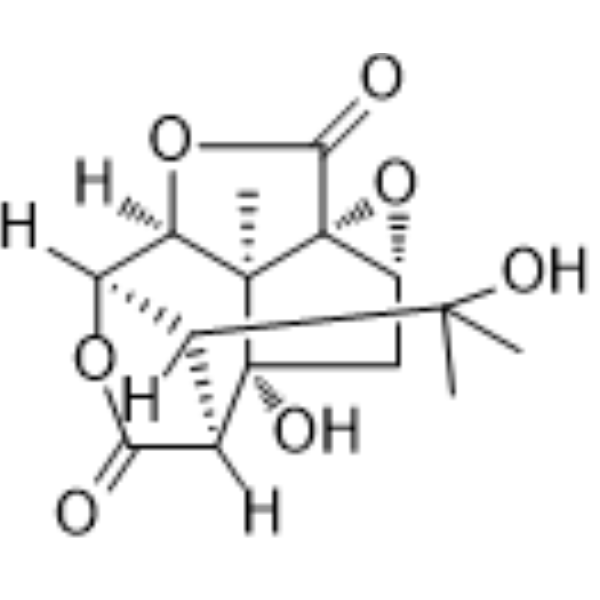
Picrotin
CAS No. 21416-53-5
Picrotin( —— )
Catalog No. M32272 CAS No. 21416-53-5
Picrotin is an inhibitor of glycine receptors. Picrotin blocks α2 GlyR, α1 GlyR, and α3 GlyR and can be used in studies about neurotransmission.
Purity : >98% (HPLC)
 COA
Datasheet
HNMR
HPLC
MSDS
Handing Instructions
COA
Datasheet
HNMR
HPLC
MSDS
Handing Instructions
| Size | Price / USD | Stock | Quantity |
| 1 mL x 10 mM in DMSO | 37 | In Stock |


|
| 5MG | 29 | In Stock |
|
| 10MG | 42 | In Stock |
|
| 25MG | 67 | In Stock |
|
| 50MG | 91 | In Stock |
|
| 100MG | 138 | In Stock |
|
| 200MG | Get Quote | In Stock |
|
| 500MG | 349 | In Stock |
|
| 1G | Get Quote | In Stock |
|
Biological Information
-
Product NamePicrotin
-
NoteResearch use only, not for human use.
-
Brief DescriptionPicrotin is an inhibitor of glycine receptors. Picrotin blocks α2 GlyR, α1 GlyR, and α3 GlyR and can be used in studies about neurotransmission.
-
DescriptionPicrotin is an inhibitor of glycine receptors. Picrotin blocks α2 GlyR, α1 GlyR, and α3 GlyR and can be used in studies about neurotransmission.
-
In VitroPicrotin has sensitivity for α2 GlyRs with IC50 value of 13.1 μM.
-
In Vivo——
-
Synonyms——
-
PathwayOthers
-
TargetOther Targets
-
Recptor——
-
Research Area——
-
Indication——
Chemical Information
-
CAS Number21416-53-5
-
Formula Weight310.3
-
Molecular FormulaC15H18O7
-
Purity>98% (HPLC)
-
SolubilityIn Vitro:?DMSO : 100 mg/mL (322.27 mM)
-
SMILES——
-
Chemical Name——
Shipping & Storage Information
-
Storage(-20℃)
-
ShippingWith Ice Pack
-
Stability≥ 2 years
Reference
molnova catalog



related products
-
Cdk4/6 Inhibitor IV
Cdk4/6 inhibitor IV is a cell-permeable triaminopyrimidine that reversibly blocks Cdk4/cyclin D1 and Cdk6/cyclin D1 activity with IC50 values of 1.5 and 5.6 μM, respectively.
-
methyl 4-(2,3-dichlo...
methyl 4-(2,3-dichlorophenyl)-2,6-dimethyl-1,4-dihydropyridine-3-carboxylate
-
9-Methymyrrhone
9-Methymyrrhone is a natural product.
