


 Cart
Cart
 sales@molnova.com



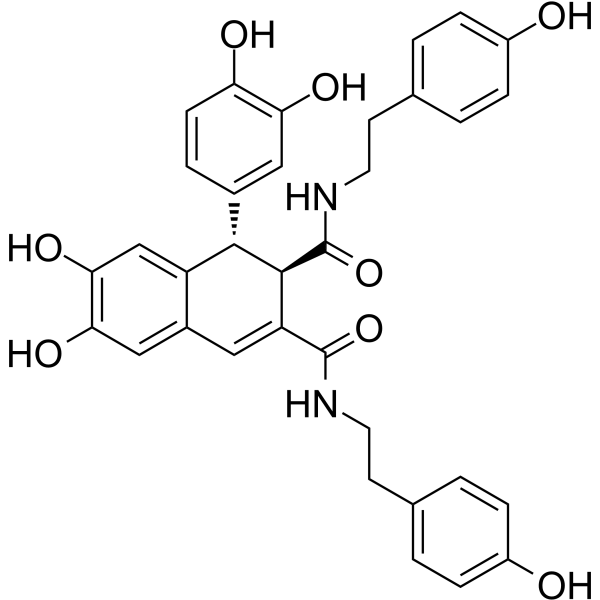
Cannabisin B
CAS No. 144506-17-2
Cannabisin B( —— )
Catalog No. M32177 CAS No. 144506-17-2
Cannabisin B possesses considerable antiproliferative activity and that it may be utilised as a promising chemopreventive agent against hepatoblastoma disease.
Purity : >98% (HPLC)
 COA
Datasheet
HNMR
HPLC
MSDS
Handing Instructions
COA
Datasheet
HNMR
HPLC
MSDS
Handing Instructions
| Size | Price / USD | Stock | Quantity |
| 5MG | 351 | In Stock |


|
| 50MG | Get Quote | In Stock |
|
| 100MG | Get Quote | In Stock |
|
| 200MG | Get Quote | In Stock |
|
| 500MG | Get Quote | In Stock |
|
| 1G | Get Quote | In Stock |
|
Biological Information
-
Product NameCannabisin B
-
NoteResearch use only, not for human use.
-
Brief DescriptionCannabisin B possesses considerable antiproliferative activity and that it may be utilised as a promising chemopreventive agent against hepatoblastoma disease.
-
DescriptionCannabisin B possesses considerable antiproliferative activity and that it may be utilised as a promising chemopreventive agent against hepatoblastoma disease. It induces autophagic cell death by inhibiting the AKT/mTOR pathway and S phase cell cycle arrest in HepG2 cell.
-
In Vitro——
-
In Vivo——
-
Synonyms——
-
PathwayOthers
-
TargetOther Targets
-
Recptor——
-
Research Area——
-
Indication——
Chemical Information
-
CAS Number144506-17-2
-
Formula Weight596.6
-
Molecular FormulaC34H32N2O8
-
Purity>98% (HPLC)
-
Solubility——
-
SMILES——
-
Chemical Name——
Shipping & Storage Information
-
Storage(-20℃)
-
ShippingWith Ice Pack
-
Stability≥ 2 years
Reference
molnova catalog



related products
-
Sinapinic Acid
Sinapic acid protects the rat liver from CCl4-induced inflammation, most likely by acting as a free radical scavenger and modulator of NF-κB p65 activation and proinflammatory cytokine expression.
-
Mahanimbine
Mahanimbine is found in the roots, leaves and stems of Murraya koenigii and is an orally active alkaloid extracted from Murraya koenigii.
-
Ginkgolic acid C13:0
Ginkgolic acid C13: exhibits the highest α-glucosidase inhibitory activity.
