


 Cart
Cart
 sales@molnova.com



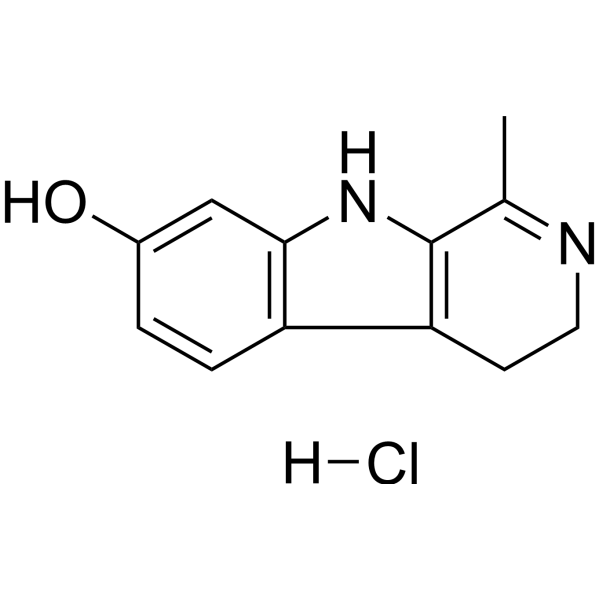
Harmidol hydrochloride
CAS No. 6028-07-5
Harmidol hydrochloride( —— )
Catalog No. M31934 CAS No. 6028-07-5
Harmalol hydrochloride is a β-carboline alkaloid that can be extracted from the seeds of Peganum harmala L. Harmalol hydrochloride is the major metabolite of Harmaline and significantly inhibits dioxin-mediated induction of CYP1A1 at both transcriptional and post-translational levels.
Purity : >98% (HPLC)
 COA
Datasheet
HNMR
HPLC
MSDS
Handing Instructions
COA
Datasheet
HNMR
HPLC
MSDS
Handing Instructions
| Size | Price / USD | Stock | Quantity |
| 1 mL x 10 mM in DMSO | 80 | In Stock |


|
| 5MG | 132 | In Stock |
|
| 10MG | 196 | In Stock |
|
| 50MG | Get Quote | In Stock |
|
| 100MG | Get Quote | In Stock |
|
| 200MG | Get Quote | In Stock |
|
| 500MG | Get Quote | In Stock |
|
| 1G | Get Quote | In Stock |
|
Biological Information
-
Product NameHarmidol hydrochloride
-
NoteResearch use only, not for human use.
-
Brief DescriptionHarmalol hydrochloride is a β-carboline alkaloid that can be extracted from the seeds of Peganum harmala L. Harmalol hydrochloride is the major metabolite of Harmaline and significantly inhibits dioxin-mediated induction of CYP1A1 at both transcriptional and post-translational levels.
-
DescriptionHarmalol hydrochloride is a β-carboline alkaloid that can be extracted from the seeds of Peganum harmala L. Harmalol hydrochloride is the major metabolite of Harmaline and significantly inhibits dioxin-mediated induction of CYP1A1 at both transcriptional and post-translational levels. Harmalol hydrochloride showed vasorelaxant activity in isolated rat thoracic aortic preparations preconstricted with phenylephrine or KCl. Harmalol hydrochloride has antioxidant activity.
-
In Vitro——
-
In Vivo——
-
Synonyms——
-
PathwayOthers
-
TargetOther Targets
-
Recptor——
-
Research Area——
-
Indication——
Chemical Information
-
CAS Number6028-07-5
-
Formula Weight236.7
-
Molecular FormulaC12H13ClN2O
-
Purity>98% (HPLC)
-
SolubilityIn Vitro:?DMSO : 100 mg/mL (422.48 mM)
-
SMILES——
-
Chemical Name——
Shipping & Storage Information
-
Storage(-20℃)
-
ShippingWith Ice Pack
-
Stability≥ 2 years
Reference
molnova catalog



related products
-
H-Ala-Asp-Ala-Gln-Hi...
H-Ala-Asp-Ala-Gln-His-Ala-Thr-Pro-Pro-Lys-Lys-Lys-Arg-Lys-Val-Glu-Asp-Pro-Lys-Asp-Phe-OH
-
(rel)-Myrislignan
(rel)-Myrislignan is a relative configuration of Myrislignan. Myrislignan is a lignan isolated from Myristica fragrans Houtt.
-
Pyridoxal 5-phosphat...
Pyridoxal 5-phosphate monohydrate is an active vitamin B6 metabolite.
