


 Cart
Cart
 sales@molnova.com



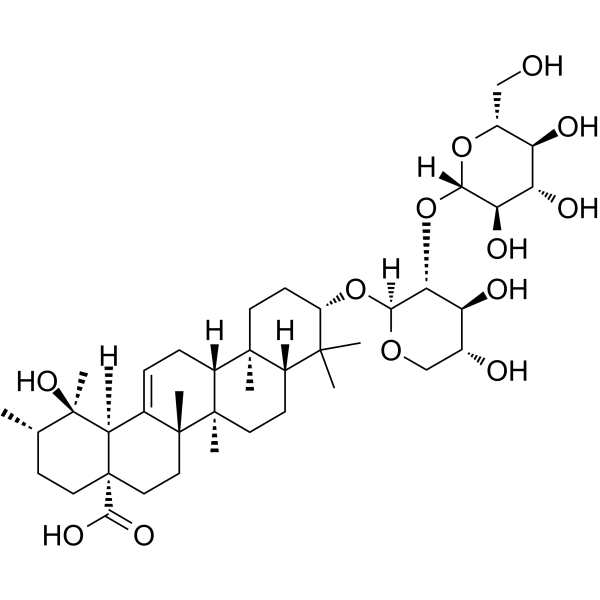
Ilexoside D
CAS No. 109008-27-7
Ilexoside D( —— )
Catalog No. M31647 CAS No. 109008-27-7
Ilexoside D has ant-allergic, and anti-coagulant activities, it shows anti-tissue factor activity as well as the antithrombotic activity.
Purity : >98% (HPLC)
 COA
Datasheet
HNMR
HPLC
MSDS
Handing Instructions
COA
Datasheet
HNMR
HPLC
MSDS
Handing Instructions
| Size | Price / USD | Stock | Quantity |
| 5MG | 64 | In Stock |


|
| 10MG | 92 | In Stock |
|
| 25MG | 166 | In Stock |
|
| 100MG | Get Quote | In Stock |
|
| 200MG | Get Quote | In Stock |
|
| 500MG | Get Quote | In Stock |
|
| 1G | Get Quote | In Stock |
|
Biological Information
-
Product NameIlexoside D
-
NoteResearch use only, not for human use.
-
Brief DescriptionIlexoside D has ant-allergic, and anti-coagulant activities, it shows anti-tissue factor activity as well as the antithrombotic activity.
-
DescriptionIlexoside D has ant-allergic, and anti-coagulant activities, it shows anti-tissue factor activity as well as the antithrombotic activity.
-
In Vitro——
-
In Vivo——
-
Synonyms——
-
PathwayOthers
-
TargetOther Targets
-
Recptor——
-
Research Area——
-
Indication——
Chemical Information
-
CAS Number109008-27-7
-
Formula Weight766.97
-
Molecular FormulaC41H66O13
-
Purity>98% (HPLC)
-
SolubilityIn Vitro:?DMSO : 100 mg/mL (130.39 mM)
-
SMILES——
-
Chemical Name——
Shipping & Storage Information
-
Storage(-20℃)
-
ShippingWith Ice Pack
-
Stability≥ 2 years
Reference
molnova catalog



related products
-
Ciraparantag acetate
Ciraparantag acetate, an anticoagulant reversal agent, is a small molecule specifically designed to bind noncovalently by charge-charge interaction to unfractionated heparin and low-molecular-weight heparin.?
-
Methylmalonic acid
Methylmalonate (MMA) is a dicarboxylic acid that can be derived from methylmalonyl-coenzyme A. It is an indicator of Vitamin B-12 deficiency in cancer.
-
α-Factor Mating Pher...
The alpha factor pheromone arrests yeast in the G1 phase of their cell cycle. Alpha Factor Mating Pheromone induces the expression of mating genes, changes in nuclear architecture, and polarzes growth toward the mating partner.
