


 Cart
Cart
 sales@molnova.com


 Home -
Products -
Others -
Other Targets -
Periplogenin 3-[O-beta-glucopyranosyl-(1->4)-beta-sarmentopyranoside]
Home -
Products -
Others -
Other Targets -
Periplogenin 3-[O-beta-glucopyranosyl-(1->4)-beta-sarmentopyranoside]
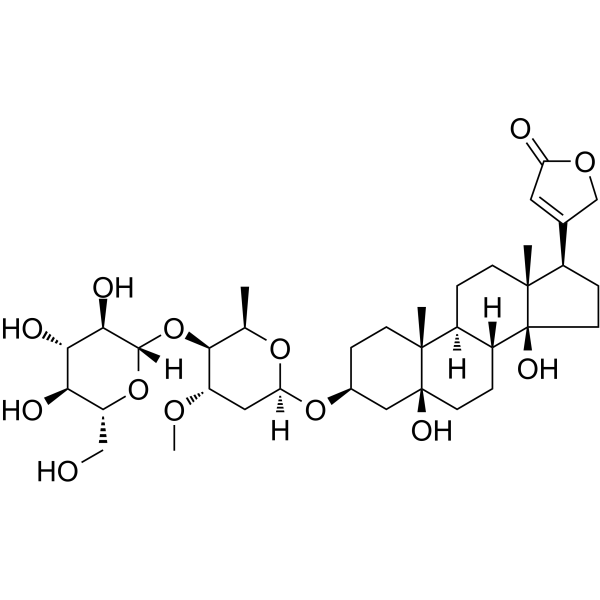
Periplogenin 3-[O-beta-glucopyranosyl-(1->4)-beta-sarmentopyranoside]
CAS No. 1253421-94-1
Periplogenin 3-[O-beta-glucopyranosyl-(1->4)-beta-sarmentopyranoside]( —— )
Catalog No. M31642 CAS No. 1253421-94-1
Periplogenin 3-[O-beta-glucopyranosyl-(1->4)-beta-sarmentopyranoside] is a natural product from Periploca sepiumBge.
Purity : >98% (HPLC)
 COA
Datasheet
HNMR
HPLC
MSDS
Handing Instructions
COA
Datasheet
HNMR
HPLC
MSDS
Handing Instructions
| Size | Price / USD | Stock | Quantity |
| 1 mL x 10 mM in DMSO | 437 | In Stock |


|
| 5MG | 311 | In Stock |
|
| 10MG | 418 | In Stock |
|
| 100MG | Get Quote | In Stock |
|
| 200MG | Get Quote | In Stock |
|
| 500MG | Get Quote | In Stock |
|
| 1G | Get Quote | In Stock |
|
Biological Information
-
Product NamePeriplogenin 3-[O-beta-glucopyranosyl-(1->4)-beta-sarmentopyranoside]
-
NoteResearch use only, not for human use.
-
Brief DescriptionPeriplogenin 3-[O-beta-glucopyranosyl-(1->4)-beta-sarmentopyranoside] is a natural product from Periploca sepiumBge.
-
DescriptionPeriplogenin 3-[O-beta-glucopyranosyl-(1->4)-beta-sarmentopyranoside] is a natural product from Periploca sepiumBge.
-
In Vitro——
-
In Vivo——
-
Synonyms——
-
PathwayOthers
-
TargetOther Targets
-
Recptor——
-
Research Area——
-
Indication——
Chemical Information
-
CAS Number1253421-94-1
-
Formula Weight696.83
-
Molecular FormulaC36H56O13
-
Purity>98% (HPLC)
-
Solubility——
-
SMILES——
-
Chemical Name——
Shipping & Storage Information
-
Storage(-20℃)
-
ShippingWith Ice Pack
-
Stability≥ 2 years
Reference
molnova catalog



related products
-
1-(2-Amino-5-hydroxy...
1-(2-Amino-5-hydroxyphenyl)propan-1-one is a useful synthetic intermediate.
-
72'-dihydroxy-3'4'-d...
72'-dihydroxy-3'4'-dimethoxyisoflavane-7-O-glucoside is a natural product from Astragalus membranaceus.
-
LtaS-IN-1
LtaS-IN-1 is an effective inhibitor of Lipoteichoic acid synthesis in multidrug-resistant (MDR) E. faecium and by altering the cell wall morphology.
