


 Cart
Cart
 sales@molnova.com



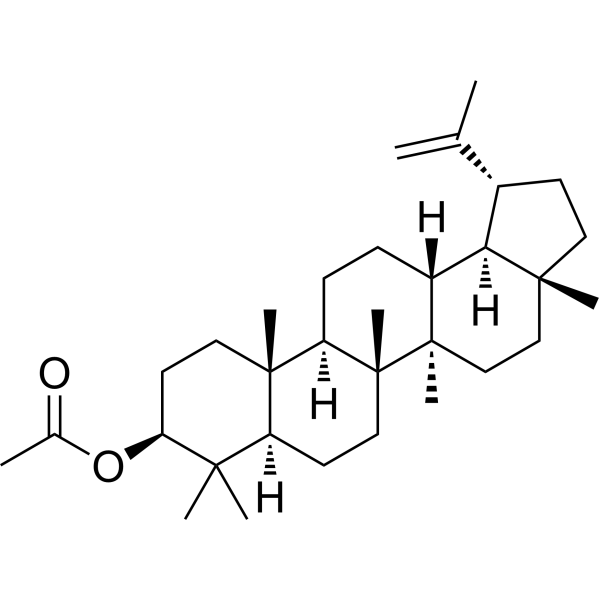
Lupeol acetate
CAS No. 1617-68-1
Lupeol acetate( —— )
Catalog No. M31526 CAS No. 1617-68-1
Lupeol acetate possesses antinociceptive, antifertility, and anti-inflammatory properties, the effect probably involves the opioid system, as indicated by the complete blockade of the opioid antagonist naloxone.
Purity : >98% (HPLC)
 COA
Datasheet
HNMR
HPLC
MSDS
Handing Instructions
COA
Datasheet
HNMR
HPLC
MSDS
Handing Instructions
| Size | Price / USD | Stock | Quantity |
| 1 mL x 10 mM in DMSO | 183 | In Stock |


|
| 5MG | 155 | In Stock |
|
| 10MG | 250 | In Stock |
|
| 25MG | 424 | In Stock |
|
| 50MG | 600 | In Stock |
|
| 100MG | Get Quote | In Stock |
|
| 200MG | Get Quote | In Stock |
|
| 500MG | Get Quote | In Stock |
|
| 1G | Get Quote | In Stock |
|
Biological Information
-
Product NameLupeol acetate
-
NoteResearch use only, not for human use.
-
Brief DescriptionLupeol acetate possesses antinociceptive, antifertility, and anti-inflammatory properties, the effect probably involves the opioid system, as indicated by the complete blockade of the opioid antagonist naloxone.
-
DescriptionLupeol acetate possesses antinociceptive, antifertility, and anti-inflammatory properties, the effect probably involves the opioid system, as indicated by the complete blockade of the opioid antagonist naloxone.
-
In Vitro——
-
In Vivo——
-
Synonyms——
-
PathwayOthers
-
TargetOther Targets
-
Recptor——
-
Research Area——
-
Indication——
Chemical Information
-
CAS Number1617-68-1
-
Formula Weight468.77
-
Molecular FormulaC32H52O2
-
Purity>98% (HPLC)
-
SolubilityIn Vitro:?Ethanol : ≥ 2 mg/mL (4.27 mM))
-
SMILES——
-
Chemical Name——
Shipping & Storage Information
-
Storage(-20℃)
-
ShippingWith Ice Pack
-
Stability≥ 2 years
Reference
molnova catalog



related products
-
Leucopyrokinin (4-8)
Leucopyrokinin (4-8); Pheromonotropic Pentapeptide
-
Trimethylacetic anhy...
Used as pharmaceutical intermediates.
-
DL-Benzylsuccinic ac...
DL-Benzylsuccinic acid is a bacterial xenobiotic metabolite.
