


 Cart
Cart
 sales@molnova.com



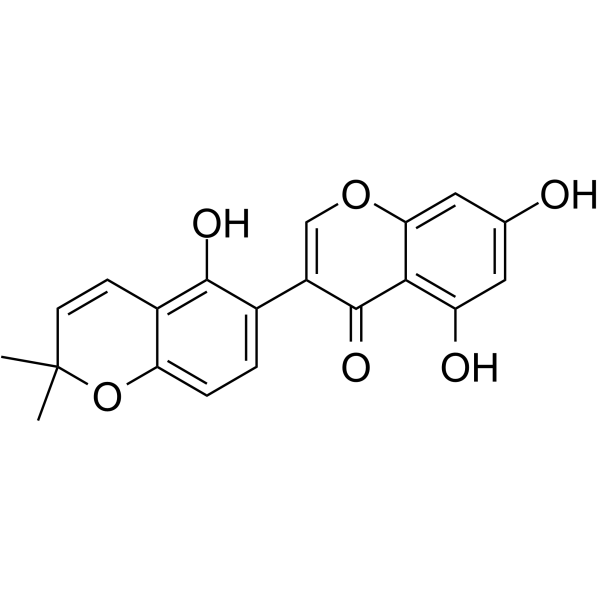
Licoisoflavone B
CAS No. 66056-30-2
Licoisoflavone B( —— )
Catalog No. M31501 CAS No. 66056-30-2
Licoisoflavone B is an inhibitor of germ tube growth in the arbuscular mycorrhizal (AM) fungus Gigaspora margarita, it can strongly inhibit germ tube growth at 0.63 ug/disc.
Purity : >98% (HPLC)
 COA
Datasheet
HNMR
HPLC
MSDS
Handing Instructions
COA
Datasheet
HNMR
HPLC
MSDS
Handing Instructions
| Size | Price / USD | Stock | Quantity |
| 1 mL x 10 mM in DMSO | 440 | In Stock |


|
| 5MG | 432 | In Stock |
|
| 10MG | 622 | In Stock |
|
| 25MG | 938 | In Stock |
|
| 50MG | 1265 | In Stock |
|
| 100MG | Get Quote | In Stock |
|
| 200MG | Get Quote | In Stock |
|
| 500MG | Get Quote | In Stock |
|
| 1G | Get Quote | In Stock |
|
Biological Information
-
Product NameLicoisoflavone B
-
NoteResearch use only, not for human use.
-
Brief DescriptionLicoisoflavone B is an inhibitor of germ tube growth in the arbuscular mycorrhizal (AM) fungus Gigaspora margarita, it can strongly inhibit germ tube growth at 0.63 ug/disc.
-
DescriptionLicoisoflavone B is an inhibitor of germ tube growth in the arbuscular mycorrhizal (AM) fungus Gigaspora margarita, it can strongly inhibit germ tube growth at 0.63 ug/disc.
-
In Vitro——
-
In Vivo——
-
Synonyms——
-
PathwayOthers
-
TargetOther Targets
-
Recptor——
-
Research Area——
-
Indication——
Chemical Information
-
CAS Number66056-30-2
-
Formula Weight352.4
-
Molecular FormulaC20H16O6
-
Purity>98% (HPLC)
-
SolubilityIn Vitro:?DMSO : 50 mg/mL (141.91 mM)
-
SMILES——
-
Chemical Name——
Shipping & Storage Information
-
Storage(-20℃)
-
ShippingWith Ice Pack
-
Stability≥ 2 years
Reference
molnova catalog



related products
-
Urotensin II , goby
Urotensin II , goby
-
Platelet Membrane Gl...
Platelet Membrane Glycoprotein IIB Peptide (296-306)
-
PF-06424439 methanes...
PF-06424439 methanesulfonate is an oral, potent and selective imidazopyridine diacylglycerol acyltransferase 2 (DGAT2) inhibitor(IC50 of 14 nM).
