


 Cart
 sales@molnova.com




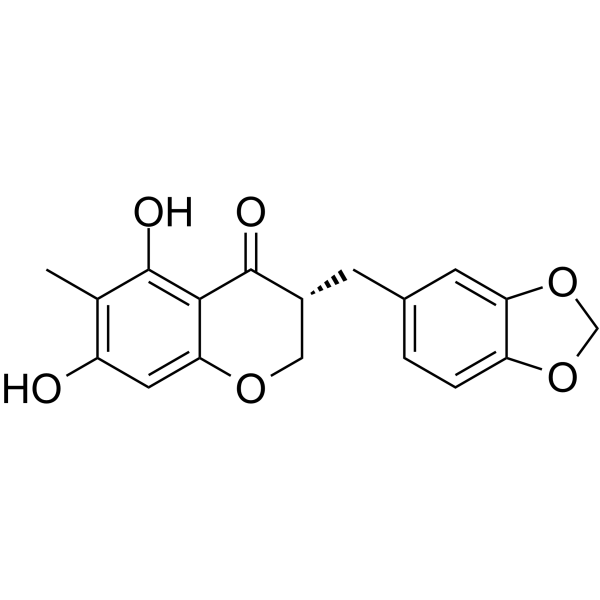
Ophiopogonanone A
CAS No. 75239-63-3
Ophiopogonanone A( —— )
Catalog No. M31492 CAS No. 75239-63-3
Ophiopogonanone A has oxygen free radicals(OFRs) scavenging effects, it can scavenge hydroxyl radical(·OH) and hydrogen peroxide(H2O2) in vitro.
Purity : >98% (HPLC)
 COA
Datasheet
HNMR
HPLC
MSDS
Handing Instructions
| Size | Price / USD | Stock | Quantity |
| 5MG | 495 | In Stock |


|
| 50MG | Get Quote | In Stock |
|
| 100MG | Get Quote | In Stock |
|
| 200MG | Get Quote | In Stock |
|
| 500MG | Get Quote | In Stock |
|
| 1G | Get Quote | In Stock |
|
Biological Information
-
Product NameOphiopogonanone A
-
NoteResearch use only, not for human use.
-
Brief DescriptionOphiopogonanone A has oxygen free radicals(OFRs) scavenging effects, it can scavenge hydroxyl radical(·OH) and hydrogen peroxide(H2O2) in vitro.
-
DescriptionOphiopogonanone A has oxygen free radicals(OFRs) scavenging effects, it can scavenge hydroxyl radical(·OH) and hydrogen peroxide(H2O2) in vitro.
-
In Vitro——
-
In Vivo——
-
Synonyms——
-
PathwayOthers
-
TargetOther Targets
-
Recptor——
-
Research Area——
-
Indication——
Chemical Information
-
CAS Number75239-63-3
-
Formula Weight328.3
-
Molecular FormulaC18H16O6
-
Purity>98% (HPLC)
-
Solubility——
-
SMILES——
-
Chemical Name——
Shipping & Storage Information
-
Storage(-20℃)
-
ShippingWith Ice Pack
-
Stability≥ 2 years
Reference
molnova catalog


related products
-
Fmoc-PEG12-NHS ester
Fmoc-PEG12-NHS ester is a PEG-based PROTAC linker that can be used to synthesize PROTACs.
-
cGMP Dependent Kinas...
Competitive inhibitor of cGMP-dependent protein kinase (PKG); analog of a substrate peptide corresponding to a phosphorylation site of histone H2B. Competes with synthetic substrates (Ki = 86 mM) but does not inhibit phosphorylation of intact histones by PKG. Inhibits phosphorylation of intact histones by PKA.
-
Heptachlor-endo-epox...
HEPTACHLOR EPOXIDE is an oxidation product of HEPTACHLOR formed by many plants and animals, including humans, after exposure to heptachlor.
