


 Cart
 sales@molnova.com




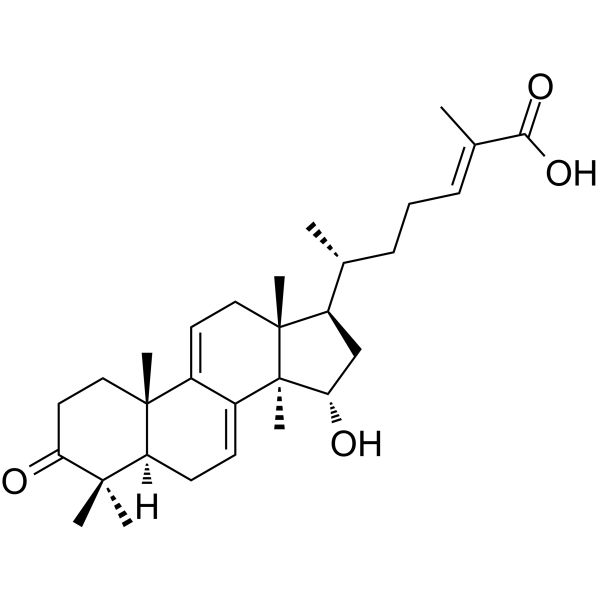
Ganoderic acid TR
CAS No. 862893-75-2
Ganoderic acid TR( —— )
Catalog No. M31234 CAS No. 862893-75-2
Ganoderic acid TR is a broad-spectrum inhibitor against influenza neuraminidases (NAs), particularly H1N1 and H5N1 neuraminidases. The IC50 values of 4.6 and 10.9 μM, respectively.
Purity : >98% (HPLC)
 COA
Datasheet
HNMR
HPLC
MSDS
Handing Instructions
| Size | Price / USD | Stock | Quantity |
| 1 mL x 10 mM in DMSO | 641 | In Stock |


|
| 5MG | 565 | In Stock |
|
| 10MG | 819 | In Stock |
|
| 100MG | Get Quote | In Stock |
|
| 200MG | Get Quote | In Stock |
|
| 500MG | Get Quote | In Stock |
|
| 1G | Get Quote | In Stock |
|
Biological Information
-
Product NameGanoderic acid TR
-
NoteResearch use only, not for human use.
-
Brief DescriptionGanoderic acid TR is a broad-spectrum inhibitor against influenza neuraminidases (NAs), particularly H1N1 and H5N1 neuraminidases. The IC50 values of 4.6 and 10.9 μM, respectively.
-
DescriptionGanoderic acid TR is a broad-spectrum inhibitor against influenza neuraminidases (NAs), particularly H1N1 and H5N1 neuraminidases. The IC50 values of 4.6 and 10.9 μM, respectively.
-
In Vitro——
-
In Vivo——
-
Synonyms——
-
PathwayOthers
-
TargetOther Targets
-
Recptor——
-
Research Area——
-
Indication——
Chemical Information
-
CAS Number862893-75-2
-
Formula Weight468.7
-
Molecular FormulaC30H44O4
-
Purity>98% (HPLC)
-
Solubility——
-
SMILES——
-
Chemical Name——
Shipping & Storage Information
-
Storage(-20℃)
-
ShippingWith Ice Pack
-
Stability≥ 2 years
Reference
molnova catalog



related products
-
Crustacean Erythroph...
Crustacean Erythrophore Concentrating Hormone
-
AUNP-12 TFA
AUNP-12 TFA (NP-12 TFA) is a polypeptide antagonist in the pd-1 signaling pathway, which has the same antagonistic effect on pd-l1 and pd-l2, and can protect the proliferation and effector function of lymphocytes.
-
KYP-2047
KYP-2047 is a very potent, selective Prolyl oligopeptidase (POP) inhibitor.In cell lines, oxidative stress induced a robust aggregation of α-synuclein,and low concentrations of KYP-2047 significantly reduced the number of cells with α-synuclein inclusions while abolishing the colocalization of α-synuclein and PREP.
