


 Cart
Cart
 sales@molnova.com



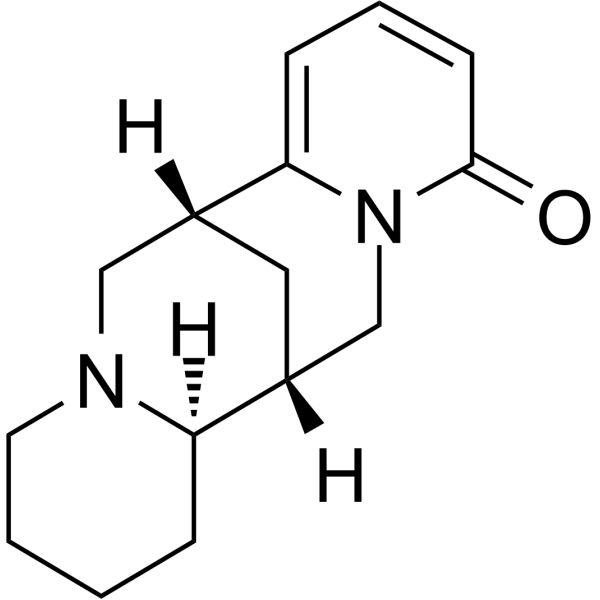
Anagyrine
CAS No. 486-89-5
Anagyrine( —— )
Catalog No. M31197 CAS No. 486-89-5
Anagyrine, is the responsible teratogen from teratogenic lupins, can produce congenital deformities in calves typical of crooked calf disease.
Purity : >98% (HPLC)
 COA
Datasheet
HNMR
HPLC
MSDS
Handing Instructions
COA
Datasheet
HNMR
HPLC
MSDS
Handing Instructions
| Size | Price / USD | Stock | Quantity |
| 5MG | 304 | In Stock |


|
| 50MG | Get Quote | In Stock |
|
| 100MG | Get Quote | In Stock |
|
| 200MG | Get Quote | In Stock |
|
| 500MG | Get Quote | In Stock |
|
| 1G | Get Quote | In Stock |
|
Biological Information
-
Product NameAnagyrine
-
NoteResearch use only, not for human use.
-
Brief DescriptionAnagyrine, is the responsible teratogen from teratogenic lupins, can produce congenital deformities in calves typical of crooked calf disease.
-
DescriptionAnagyrine, is the responsible teratogen from teratogenic lupins, can produce congenital deformities in calves typical of crooked calf disease; it also can induce red cell aplasia, vascular anomaly, and skeletal dysplasia.(-)-Anagyrine and (-)--Methylcytisine have nematicidal activities against Pine Wood Nematodes.
-
In Vitro——
-
In Vivo——
-
Synonyms——
-
PathwayOthers
-
TargetOther Targets
-
Recptor——
-
Research Area——
-
Indication——
Chemical Information
-
CAS Number486-89-5
-
Formula Weight244.3
-
Molecular FormulaC15H20N2O
-
Purity>98% (HPLC)
-
SolubilityIn Vitro:?H2O : 25 mg/mL (102.32 mM)
-
SMILES——
-
Chemical Name——
Shipping & Storage Information
-
Storage(-20℃)
-
ShippingWith Ice Pack
-
Stability≥ 2 years
Reference
molnova catalog



related products
-
Tetramethyluric acid
Tetramethyluric acid (1,3,7,9-Tetramethyluric acid; Theacrine), also known as tetramethyluric acid or theophylline, is a purine alkaloid with a structure similar to caffeine. Tetramethyluric acid is a biomaterial or organic compound that can be used as a research-related biomaterial or organic compound in life sciences.
-
Pherocon (4-(4-Aceto...
Pherocon (4-(4-Acetoxyphenyl)-2-butanone) is a standard melon fly attractant.
-
3-(Trifluoromethyl)b...
3-(Trifluoromethyl)benzaldehyde is a chemical compound.
