


 Cart
Cart
 sales@molnova.com



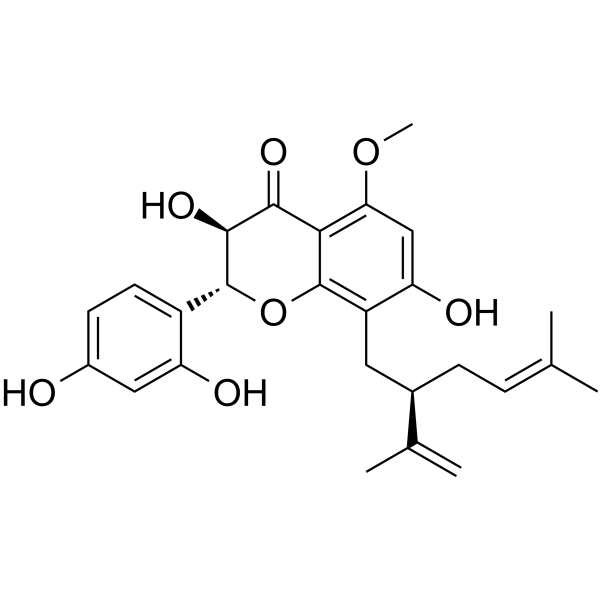
Kushenol I
CAS No. 99119-69-4
Kushenol I( —— )
Catalog No. M31173 CAS No. 99119-69-4
Kushenol I is a GABAA receptor modulator, it exhibits inhibitory activity against Sodium-dependent glucose cotransporter 2(SGLT2).
Purity : >98% (HPLC)
 COA
Datasheet
HNMR
HPLC
MSDS
Handing Instructions
COA
Datasheet
HNMR
HPLC
MSDS
Handing Instructions
| Size | Price / USD | Stock | Quantity |
| 5MG | 275 | In Stock |


|
| 10MG | 407 | In Stock |
|
| 25MG | 663 | In Stock |
|
| 50MG | 900 | In Stock |
|
| 100MG | Get Quote | In Stock |
|
| 200MG | Get Quote | In Stock |
|
| 500MG | Get Quote | In Stock |
|
| 1G | Get Quote | In Stock |
|
Biological Information
-
Product NameKushenol I
-
NoteResearch use only, not for human use.
-
Brief DescriptionKushenol I is a GABAA receptor modulator, it exhibits inhibitory activity against Sodium-dependent glucose cotransporter 2(SGLT2).
-
DescriptionKushenol I is a GABAA receptor modulator, it exhibits inhibitory activity against Sodium-dependent glucose cotransporter 2(SGLT2).Kushenol I is shown to be active against the plant pathogenic fungus Cladosporium cucumerinum.
-
In Vitro——
-
In Vivo——
-
Synonyms——
-
PathwayOthers
-
TargetOther Targets
-
Recptor——
-
Research Area——
-
Indication——
Chemical Information
-
CAS Number99119-69-4
-
Formula Weight454.5
-
Molecular FormulaC26H30O7
-
Purity>98% (HPLC)
-
SolubilityIn Vitro:?DMSO : 100 mg/mL (220.02 mM)
-
SMILES——
-
Chemical Name——
Shipping & Storage Information
-
Storage(-20℃)
-
ShippingWith Ice Pack
-
Stability≥ 2 years
Reference
molnova catalog



related products
-
Ornipressin Acetate(...
Ornipressin Acetate is a potent vasoconstrictor, hemostatic and renal agent.
-
Procyanidin C2
Procyanidin C2 is a phenol glycoside derived from Fagopyrum dibotrys (D. Don) Hara.
-
Chlormethiazole hydr...
Chlormethiazole hydrochloride is an anticonvulsant and sedative.
