


 Cart
Cart
 sales@molnova.com



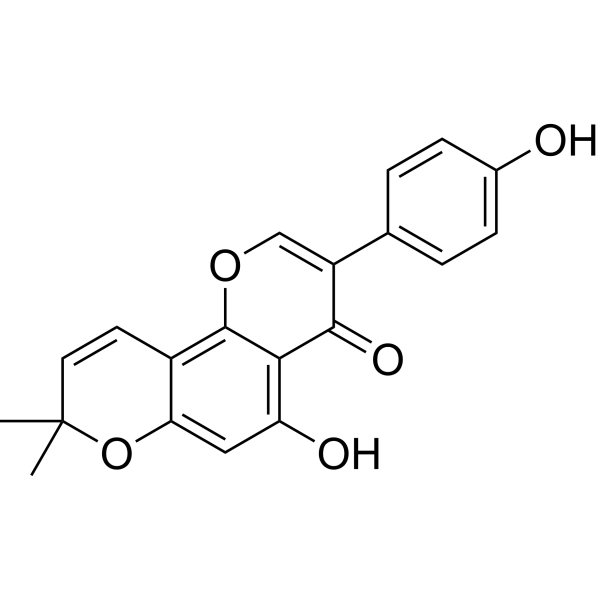
Derrone
CAS No. 76166-59-1
Derrone( —— )
Catalog No. M31114 CAS No. 76166-59-1
Derrone may be interesting antimicrobial agents to be used against infectious diseases caused by many pathogens.
Purity : >98% (HPLC)
 COA
Datasheet
HNMR
HPLC
MSDS
Handing Instructions
COA
Datasheet
HNMR
HPLC
MSDS
Handing Instructions
| Size | Price / USD | Stock | Quantity |
| 5MG | 1430 | In Stock |


|
| 50MG | Get Quote | In Stock |
|
| 100MG | Get Quote | In Stock |
|
| 200MG | Get Quote | In Stock |
|
| 500MG | Get Quote | In Stock |
|
| 1G | Get Quote | In Stock |
|
Biological Information
-
Product NameDerrone
-
NoteResearch use only, not for human use.
-
Brief DescriptionDerrone may be interesting antimicrobial agents to be used against infectious diseases caused by many pathogens.
-
DescriptionDerrone may be interesting antimicrobial agents to be used against infectious diseases caused by many pathogens. It is also a novel Aurora kinase inhibitor, it can significantly inhibit the formation and growth of MCF7 tumor spheroids.
-
In VitroDerrone (30-60 μM, 15 days) significantly inhibits the formation and growth of MCF7 tumor spheroids, with the tumor spheroid growth inhibition (% TGI) of 17.5% and 65.4% for 30 and 60?μM Derrone, respectively. Derrone shows the autophagic features, such as the conversion of LC3-I to LC3-II, the formation of autophagosome and the downregulation of SQSTM1/p62 (p62).Derrone induces autophagic cell death through intracellular ROS and sustained ERK phosphorylation in A549 cells.
-
In Vivo——
-
Synonyms——
-
PathwayOthers
-
TargetOther Targets
-
Recptor——
-
Research Area——
-
Indication——
Chemical Information
-
CAS Number76166-59-1
-
Formula Weight336.34
-
Molecular FormulaC20H16O5
-
Purity>98% (HPLC)
-
Solubility——
-
SMILES——
-
Chemical Name——
Shipping & Storage Information
-
Storage(-20℃)
-
ShippingWith Ice Pack
-
Stability≥ 2 years
Reference
molnova catalog



related products
-
Oxoglaucine
Oxoglaucine exerts immunomodulatory effect in vivo in a dose-dependent and protocol-dependent manner, it also exhibits significant antiplatelet aggregation activity against rabbit platelets induced by thrombin, arachidonic acid, collagen or platelet activating factor.
-
PACAP (6-38), human,...
PACAP (6-38), human, ovine, rat is a potent antagonist of PACAP 38. PACAP (6-38) is much more potent and selective than PACAP (6-27) in the inhibition of PACAP-27-stimulated pituitary adenylate cyclase.
-
Pyrrolidine
Pyrrolidine is a flavoring agent which could be found in the leaves of tobacco and carrot.
