


 Cart
Cart
 sales@molnova.com



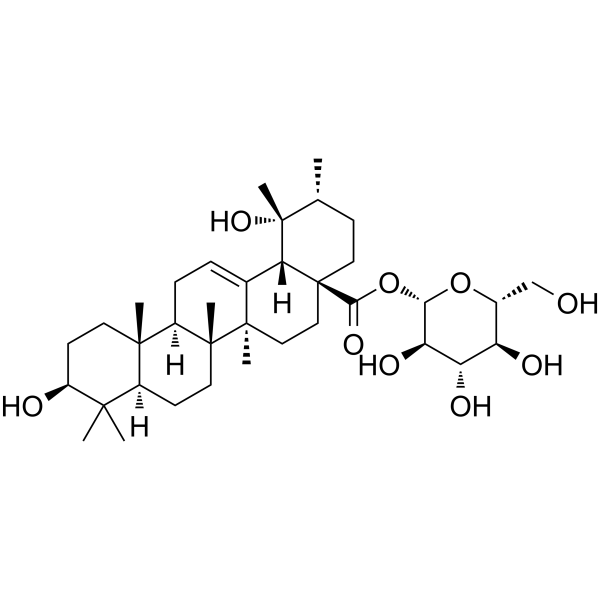
Pomolic acid 28-O-beta-D-glucopyranosyl ester
CAS No. 83725-24-0
Pomolic acid 28-O-beta-D-glucopyranosyl ester( —— )
Catalog No. M31076 CAS No. 83725-24-0
Pomolic acid 28-O-beta-D-glucopyranosyl ester is a natural product.
Purity : >98% (HPLC)
 COA
Datasheet
HNMR
HPLC
MSDS
Handing Instructions
COA
Datasheet
HNMR
HPLC
MSDS
Handing Instructions
| Size | Price / USD | Stock | Quantity |
| 5MG | 572 | In Stock |


|
| 50MG | Get Quote | In Stock |
|
| 100MG | Get Quote | In Stock |
|
| 200MG | Get Quote | In Stock |
|
| 500MG | Get Quote | In Stock |
|
| 1G | Get Quote | In Stock |
|
Biological Information
-
Product NamePomolic acid 28-O-beta-D-glucopyranosyl ester
-
NoteResearch use only, not for human use.
-
Brief DescriptionPomolic acid 28-O-beta-D-glucopyranosyl ester is a natural product.
-
DescriptionPomolic acid 28-O-beta-D-glucopyranosyl ester is a natural product.
-
In Vitro——
-
In Vivo——
-
Synonyms——
-
PathwayOthers
-
TargetOther Targets
-
Recptor——
-
Research Area——
-
Indication——
Chemical Information
-
CAS Number83725-24-0
-
Formula Weight634.9
-
Molecular FormulaC36H58O9
-
Purity>98% (HPLC)
-
Solubility——
-
SMILES——
-
Chemical Name——
Shipping & Storage Information
-
Storage(-20℃)
-
ShippingWith Ice Pack
-
Stability≥ 2 years
Reference
molnova catalog



related products
-
CSP
CSP
-
5-Hydroxymethyl-2-fu...
5-Hydroxymethyl-2-furancarboxylic acid (Sumiki's acid) is a naturally occurring human metabolite. Sumiki's acid was first identified in the urine of a leukemia patient who was excreting an abnormal amount of its glycine derivative. Sumiki's acid has been found to be a byproduct of the fungus Aspergillus and probably other species of fungi and yeast as well.
-
6-Hydroxyindole
6-Hydroxyindole is a reactant for asymmetrical synthesis of notoamide J as a potential biosynthetic precursor of prenylated indole alkaloids and for preparation of indoleoxyacetic acid derivatives as peroxisome proliferator-activated receptor agonists.
