


 Cart
Cart
 sales@molnova.com



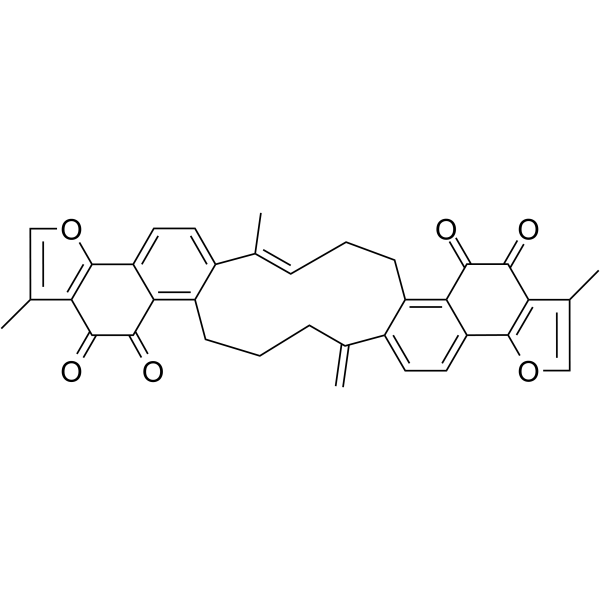
Neoprzewaquinone A
CAS No. 630057-39-5
Neoprzewaquinone A( —— )
Catalog No. M31031 CAS No. 630057-39-5
Neoprzewaquinone A has algicidal effect on M. aeruginosa , with EC50 of 4.68 mg /L, the potential inhibition mechanisms are neo-przewaquinone A caused M. aeruginosa cells morphologic damage or lysis.
Purity : >98% (HPLC)
 COA
Datasheet
HNMR
HPLC
MSDS
Handing Instructions
COA
Datasheet
HNMR
HPLC
MSDS
Handing Instructions
| Size | Price / USD | Stock | Quantity |
| 5MG | 395 | In Stock |


|
| 50MG | Get Quote | In Stock |
|
| 100MG | Get Quote | In Stock |
|
| 200MG | Get Quote | In Stock |
|
| 500MG | Get Quote | In Stock |
|
| 1G | Get Quote | In Stock |
|
Biological Information
-
Product NameNeoprzewaquinone A
-
NoteResearch use only, not for human use.
-
Brief DescriptionNeoprzewaquinone A has algicidal effect on M. aeruginosa , with EC50 of 4.68 mg /L, the potential inhibition mechanisms are neo-przewaquinone A caused M. aeruginosa cells morphologic damage or lysis.
-
DescriptionNeoprzewaquinone A has algicidal effect on M. aeruginosa , with EC50 of 4.68 mg /L, the potential inhibition mechanisms are neo-przewaquinone A caused M. aeruginosa cells morphologic damage or lysis.
-
In Vitro——
-
In Vivo——
-
Synonyms——
-
PathwayOthers
-
TargetOther Targets
-
Recptor——
-
Research Area——
-
Indication——
Chemical Information
-
CAS Number630057-39-5
-
Formula Weight556.6
-
Molecular FormulaC36H28O6
-
Purity>98% (HPLC)
-
Solubility——
-
SMILES——
-
Chemical Name——
Shipping & Storage Information
-
Storage(-20℃)
-
ShippingWith Ice Pack
-
Stability≥ 2 years
Reference
molnova catalog



related products
-
GSK329
GSK329 is an effective and selective inhibitor of TNNI3 Interacting Kinase (TNNI3K). GSK329 exhibits positive cardioprotective outcomes in the model of ischemia/reperfusion cardiac injury.
-
TRH-Gly
Trh-gly (TRH-glycine) is a precursor of thyrotropin (TSH)-releasing hormone (TRH) that can release thyrotropin and prolactin.
-
Poly Vinyl Alcohol
Poly Vinyl Alcohol (Polyvinyl alcohol) is a water-soluble, biodegradable, wound-healing polymer used in a wide range of biomedical applications.Poly Vinyl Alcohol is commonly used in the manufacture of medical excipients.
