


 Cart
Cart
 sales@molnova.com



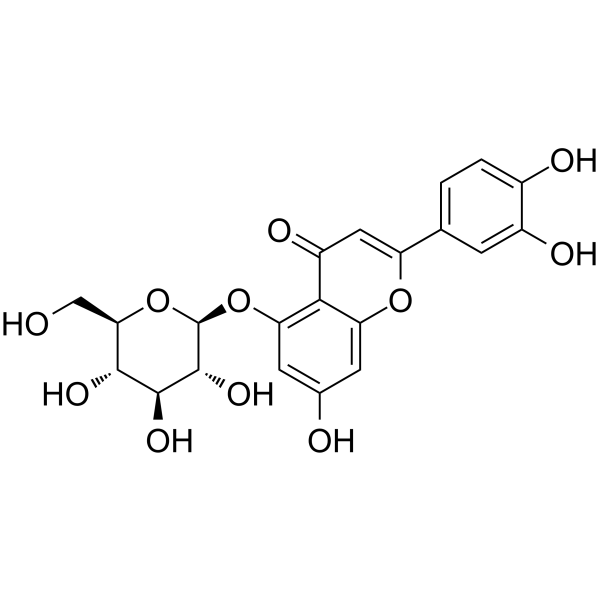
Luteollin 5-glucoside
CAS No. 20344-46-1
Luteollin 5-glucoside( —— )
Catalog No. M30954 CAS No. 20344-46-1
Luteolin 5-O-α2-glucopyranoside has antioxidant activity, it can inhibit lipid peroxidation, and has DPPH radical-scavenging activity.
Purity : >98% (HPLC)
 COA
Datasheet
HNMR
HPLC
MSDS
Handing Instructions
COA
Datasheet
HNMR
HPLC
MSDS
Handing Instructions
| Size | Price / USD | Stock | Quantity |
| 5MG | 455 | In Stock |


|
| 10MG | 809 | In Stock |
|
| 25MG | 1121 | In Stock |
|
| 50MG | 1649 | In Stock |
|
| 100MG | Get Quote | In Stock |
|
| 200MG | Get Quote | In Stock |
|
| 500MG | Get Quote | In Stock |
|
| 1G | Get Quote | In Stock |
|
Biological Information
-
Product NameLuteollin 5-glucoside
-
NoteResearch use only, not for human use.
-
Brief DescriptionLuteolin 5-O-α2-glucopyranoside has antioxidant activity, it can inhibit lipid peroxidation, and has DPPH radical-scavenging activity.
-
DescriptionLuteolin 5-O-α2-glucopyranoside has antioxidant activity, it can inhibit lipid peroxidation, and has DPPH radical-scavenging activity.
-
In VitroLuteolin 5-O-glucoside, at a non-toxic concentration, inhibits LPS-induced NO production and t-BHP-induced ROS generation in a dose-dependent manner in RAW 264.7 cells. Luteolin 5-O-glucoside also suppresses the expression of iNOS and COX-2 in LPS-stimulated macrophages.
-
In Vivo——
-
Synonyms——
-
PathwayOthers
-
TargetOther Targets
-
Recptor——
-
Research Area——
-
Indication——
Chemical Information
-
CAS Number20344-46-1
-
Formula Weight448.38
-
Molecular FormulaC21H20O11
-
Purity>98% (HPLC)
-
Solubility——
-
SMILES——
-
Chemical Name——
Shipping & Storage Information
-
Storage(-20℃)
-
ShippingWith Ice Pack
-
Stability≥ 2 years
Reference
molnova catalog



related products
-
Mitochonic acid 5
Mitochonic acid 5 is a derivative of the plant hormone indole-3-acetic acid. Mitochonic acid 5 binds mitochondria and ameliorates renal tubular and cardiac myocyte damage.
-
Suffruticosol B
Suffruticosol B
-
Geraniol
geraniol?provides a potent protective effect against cardiac dysfunction induced by diabetes. This ameliorative effect could be attributed to its suppression of oxidative stress.
