


 Cart
Cart
 sales@molnova.com



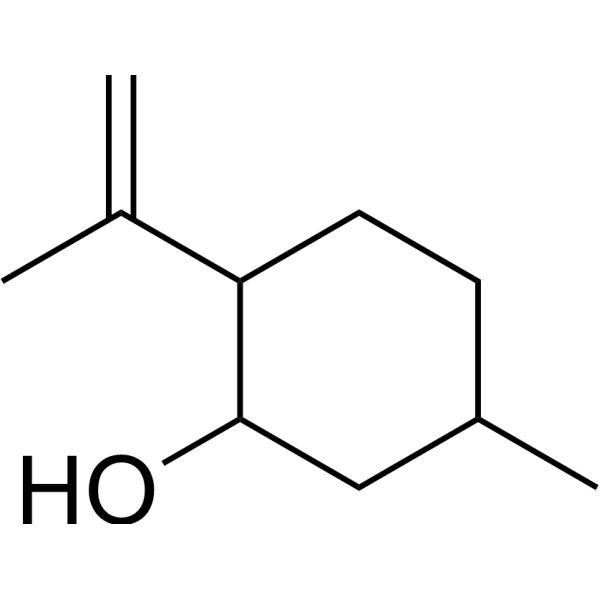
Isopulegol
CAS No. 7786-67-6
Isopulegol( —— )
Catalog No. M30908 CAS No. 7786-67-6
Isopulegol presents depressant- and anxiolytic-like effects, it also has anticonvulsant and bioprotective effects against PTZ-induced convulsions are possibly related to positive modulation of benzodiazepine-sensitive GABAA receptors and to antioxidant properties.
Purity : >98% (HPLC)
 COA
Datasheet
HNMR
HPLC
MSDS
Handing Instructions
COA
Datasheet
HNMR
HPLC
MSDS
Handing Instructions
| Size | Price / USD | Stock | Quantity |
| 50MG | Get Quote | In Stock |


|
| 100MG | Get Quote | In Stock |
|
| 200MG | Get Quote | In Stock |
|
| 500MG | Get Quote | In Stock |
|
| 1G | Get Quote | In Stock |
|
Biological Information
-
Product NameIsopulegol
-
NoteResearch use only, not for human use.
-
Brief DescriptionIsopulegol presents depressant- and anxiolytic-like effects, it also has anticonvulsant and bioprotective effects against PTZ-induced convulsions are possibly related to positive modulation of benzodiazepine-sensitive GABAA receptors and to antioxidant properties.
-
DescriptionIsopulegol presents depressant- and anxiolytic-like effects, it also has anticonvulsant and bioprotective effects against PTZ-induced convulsions are possibly related to positive modulation of benzodiazepine-sensitive GABAA receptors and to antioxidant properties.
-
In Vitro——
-
In Vivo——
-
Synonyms——
-
PathwayOthers
-
TargetOther Targets
-
Recptor——
-
Research Area——
-
Indication——
Chemical Information
-
CAS Number7786-67-6
-
Formula Weight154.25
-
Molecular FormulaC10H18O
-
Purity>98% (HPLC)
-
Solubility——
-
SMILES——
-
Chemical Name——
Shipping & Storage Information
-
Storage(-20℃)
-
ShippingWith Ice Pack
-
Stability≥ 2 years
Reference
molnova catalog



related products
-
MM 54
Potent apelin receptor antagonist (Ki = 82 nM; IC50 = 93 nM). Antagonizes the inhibitory affect of [Pyr1]-Apelin-13 on forskolin-induced cAMP accumulation in CHO-K1-APJ cells. Recuces tumor expansion and lengthens survival time in a mouse xenograft model of glioblastoma.
-
Ezatiostat hydrochlo...
Ezatiostat hydrochloride is an effective inhibitor of glutathione S-transferase. Ezatiostat hydrochloride is a novel glutathione analog and the potential treatment of cytopenias.
-
Retronecine
Retronecine acts as the better competitor for the competitive inhibition of antibodies to Retronecine.
