


 Cart
Cart
 sales@molnova.com



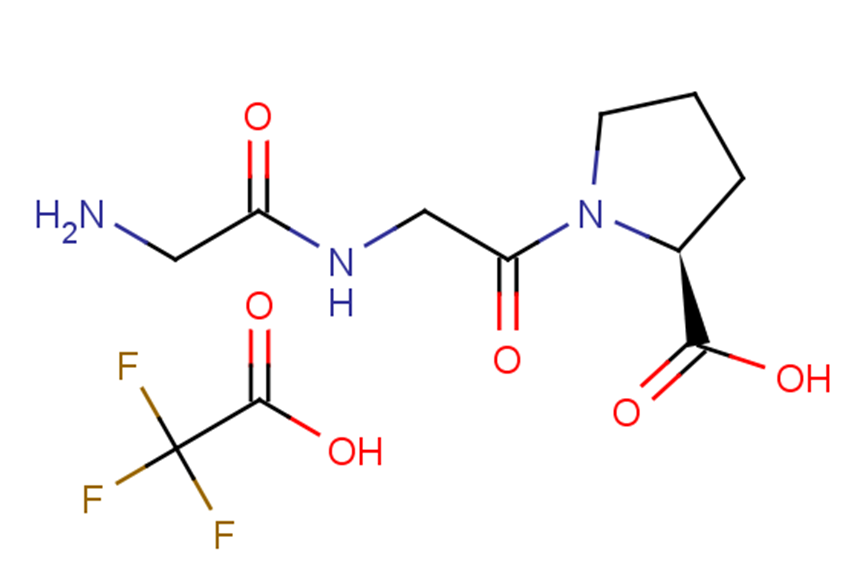
H-Gly-Gly-Pro-OH
CAS No. 14379-76-1
H-Gly-Gly-Pro-OH( —— )
Catalog No. M29855 CAS No. 14379-76-1
H-Gly-Pro-OH is a dipeptide composed of glycine and proline, and is an end product of collagen metabolism that is further cleaved by prolidase.
Purity : >98% (HPLC)
 COA
Datasheet
HNMR
HPLC
MSDS
Handing Instructions
COA
Datasheet
HNMR
HPLC
MSDS
Handing Instructions
| Size | Price / USD | Stock | Quantity |
| 10MG | 32 | In Stock |


|
| 25MG | 51 | In Stock |
|
| 50MG | 72 | In Stock |
|
| 100MG | 105 | In Stock |
|
| 200MG | 154 | In Stock |
|
| 500MG | Get Quote | In Stock |
|
| 1G | Get Quote | In Stock |
|
Biological Information
-
Product NameH-Gly-Gly-Pro-OH
-
NoteResearch use only, not for human use.
-
Brief DescriptionH-Gly-Pro-OH is a dipeptide composed of glycine and proline, and is an end product of collagen metabolism that is further cleaved by prolidase.
-
DescriptionH-Gly-Pro-OH is a dipeptide composed of glycine and proline, and is an end product of collagen metabolism that is further cleaved by prolidase.
-
In Vitro——
-
In Vivo——
-
Synonyms——
-
PathwayOthers
-
TargetOther Targets
-
Recptor——
-
Research Area——
-
Indication——
Chemical Information
-
CAS Number14379-76-1
-
Formula Weight229.23
-
Molecular FormulaC9H15N3O4
-
Purity>98% (HPLC)
-
SolubilityIn Vitro:?H2O : ≥ 100 mg/mL (436.24 mM))
-
SMILES——
-
Chemical Name——
Shipping & Storage Information
-
Storage(-20℃)
-
ShippingWith Ice Pack
-
Stability≥ 2 years
Reference
molnova catalog



related products
-
NH2-C5-NH-Boc
NH2-C5-NH-Boc (PROTAC Linker 23) is an alkyl chain-based PROTAC linker that can be used in the synthesis of PROTACs.
-
pyridostigmine
Pyridostigmine?is an?acetylcholinesterase inhibitor?that can treat myasthenia gravis by increasing acetylcholine at the postsynaptic motor endplate.
-
Cyclo(Tyr-Phe)
Cyclo-(Phe-Tyr) shows anticoagulant activities.
