


 Cart
Cart
 sales@molnova.com



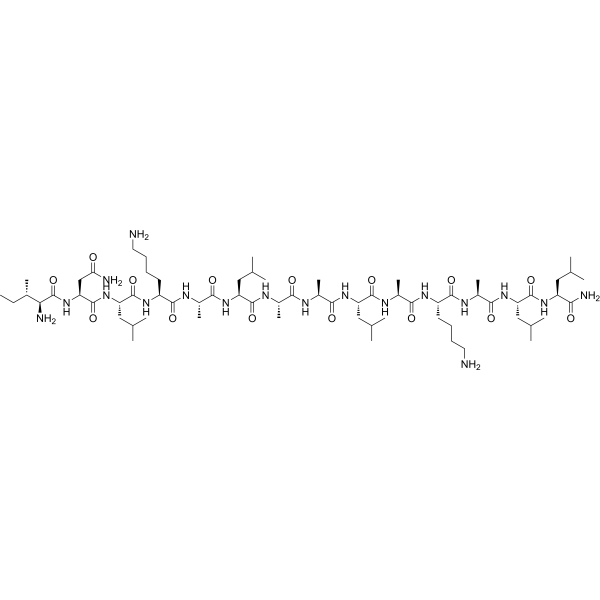
Mas7
CAS No. 145854-59-7
Mas7( Mastoparan 7 )
Catalog No. M29806 CAS No. 145854-59-7
Amphiphilic peptide Mas7, a structural analogue of mastoparan is a known activator of heterotrimeric Gi-proteins and its downstream effectors.
Purity : >98% (HPLC)
 COA
Datasheet
HNMR
HPLC
MSDS
Handing Instructions
COA
Datasheet
HNMR
HPLC
MSDS
Handing Instructions
| Size | Price / USD | Stock | Quantity |
| 5MG | 320 | Get Quote |


|
| 10MG | 498 | Get Quote |
|
| 25MG | 842 | Get Quote |
|
| 100MG | Get Quote | Get Quote |
|
| 200MG | Get Quote | Get Quote |
|
| 500MG | Get Quote | Get Quote |
|
| 1G | Get Quote | Get Quote |
|
Biological Information
-
Product NameMas7
-
NoteResearch use only, not for human use.
-
Brief DescriptionAmphiphilic peptide Mas7, a structural analogue of mastoparan is a known activator of heterotrimeric Gi-proteins and its downstream effectors.
-
DescriptionAmphiphilic peptide Mas7, a structural analogue of mastoparan is a known activator of heterotrimeric Gi-proteins and its downstream effectors. (In Vitro):Mas7 produces several biological effects in different cell types. The effect of Mas7 on endogenous mono-ADP-ribosyltransferase activity is in the micromolar range with a maximal activation of 205% over the basal. In pertussis treated plasma membranes, it is found that the effect of Mas7 on endogenous mono-ADP-ribosyltransferase is partially blocked, which suggests the involvement of G-proteins, such as Gi or G0. Mas7 is a basic tetradecapeptide isolated from isp venom, which activates guanine nucleotide-binding regulatory proteins (G-proteins) and stimulates apoptosis. In smooth muscle cells, Mas7 leads to an increase in the perfusion pressure. Vascular contraction is induced by Mas7. The vasoconstriction triggered by mas-7 exhibited a slower increase compared to that simulated by phenylephrine or vasopressin. Exposure of hippocampal neurons to a low dose of Mas-7 increases dendritic spine density and spine head width in a time-dependent manner. Additionally, Mas-7 enhances postsynaptic density protein-95 (PSD-95) clustering in neurites and activates Gαo signaling, increasing the intracellular Ca2+ concentration.
-
In VitroMas7 (Mastoparan 7) produces several biological effects in different cell types. The effect of Mas7 on endogenous mono-ADP-ribosyltransferase activity is in the micromolar range with a maximal activation of 205% over the basal. In pertussis treated plasma membranes, it is found that the effect of Mas7 on endogenous mono-ADP-ribosyltransferase is partially blocked, which suggests the involvement of G-proteins, such as Gi or G0. Mas7 is a basic tetradecapeptide isolated from isp venom, which activates guanine nucleotide-binding regulatory proteins (G-proteins) and stimulates apoptosis. In smooth muscle cells, Mas7 leads to an increase in the perfusion pressure. Vascular contraction is induced by Mas7. The vasoconstriction triggered by mas-7 exhibited a slower increase compared to that simulated by phenylephrine or vasopressin. Exposure of hippocampal neurons to a low dose of Mas-7 increases dendritic spine density and spine head width in a time-dependent manner. Additionally, Mas-7 enhances postsynaptic density protein-95 (PSD-95) clustering in neurites and activates Gαo signaling, increasing the intracellular Ca2+ concentration.
-
In Vivo——
-
SynonymsMastoparan 7
-
PathwayOthers
-
TargetOther Targets
-
Recptor——
-
Research Area——
-
Indication——
Chemical Information
-
CAS Number145854-59-7
-
Formula Weight1421.81
-
Molecular FormulaC67H124N18O15
-
Purity>98% (HPLC)
-
Solubility——
-
SMILES——
-
Chemical NameSequence:Ile-Asn-Leu-Lys-Ala-Leu-Ala-Ala-Leu-Ala-Lys-Ala-Leu-Leu-NH2
Shipping & Storage Information
-
Storage(-20℃)
-
ShippingWith Ice Pack
-
Stability≥ 2 years
Reference



-
Phenyl-Ac-Gln-OH
Phenylacetylglutamine is a normal constituent of human urine but other mammals such as the dog cat rat monkey sheep and horse do not excrete this compound. Phenylacetylglutamine is a major nitrogenous metabolite that accumulates in uremia. Phenylacetylglutamine also is a microbial metabolite found in Christensenellaceae Lachnospiraceae and Ruminococcaceae.
-
Divalproex Sodium
Divalproex Sodium binds to and inhibits gamma-aminobutyric acid (GABA) transaminase and its anticonvulsant activity may be exerted by increasing brain concentration of GABA and by inhibiting enzymes that catabolize GABA or block the reuptake of GABA into glia and nerve endings.
-
Taxifolin 7-O-β-D-gl...
Taxifolin 7-O-β-D-glucoside is a flavonoid mainly found in endosperm and involved in defense against pathogens and UV damage.
