


 Cart
 sales@molnova.com




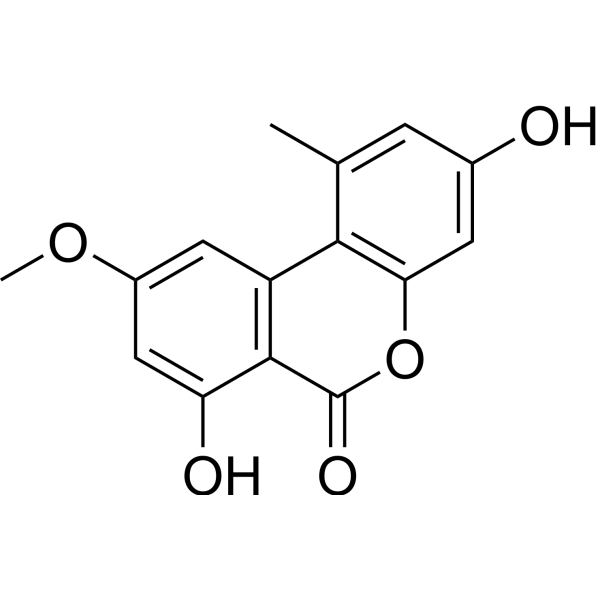
Djalonensone
CAS No. 23452-05-3
Djalonensone( Alternariol monomethyl ether )
Catalog No. M29281 CAS No. 23452-05-3
Alternariol monomethyl ether, an Alternaria toxin, is a strong mutagen in Escherichia coli strain ND-160. Alternariol monomethyl ether has genotoxic properties, it can cause oxidative DNA damage. It also possesses cytotoxic and immunosuppressive properties.
Purity : >98% (HPLC)
 COA
Datasheet
HNMR
HPLC
MSDS
Handing Instructions
| Size | Price / USD | Stock | Quantity |
| 5MG | 1618 | Get Quote |


|
| 10MG | 2423 | Get Quote |
|
| 100MG | Get Quote | Get Quote |
|
| 200MG | Get Quote | Get Quote |
|
| 500MG | Get Quote | Get Quote |
|
| 1G | Get Quote | Get Quote |
|
Biological Information
-
Product NameDjalonensone
-
NoteResearch use only, not for human use.
-
Brief DescriptionAlternariol monomethyl ether, an Alternaria toxin, is a strong mutagen in Escherichia coli strain ND-160. Alternariol monomethyl ether has genotoxic properties, it can cause oxidative DNA damage. It also possesses cytotoxic and immunosuppressive properties.
-
DescriptionAlternariol monomethyl ether, an Alternaria toxin, is a strong mutagen in Escherichia coli strain ND-160. Alternariol monomethyl ether has genotoxic properties, it can cause oxidative DNA damage. It also possesses cytotoxic and immunosuppressive properties.
-
In Vitro——
-
In Vivo——
-
SynonymsAlternariol monomethyl ether
-
PathwayOthers
-
TargetOther Targets
-
Recptor——
-
Research Area——
-
Indication——
Chemical Information
-
CAS Number23452-05-3
-
Formula Weight272.256
-
Molecular FormulaC15H12O5
-
Purity>98% (HPLC)
-
SolubilityIn Vitro:?DMSO : 5 mg/mL (18.36 mM)
-
SMILESCOc1cc(O)c2c(c1)c1c(C)cc(O)cc1oc2=O
-
Chemical Name——
Shipping & Storage Information
-
Storage(-20℃)
-
ShippingWith Ice Pack
-
Stability≥ 2 years
Reference
molnova catalog



related products
-
Ly93
Ly93 is a selective and orally active sphingomyelin synthase 2 (SMS2) inhibitor (IC50: 91 nM) used for studying atherosclerosis.
-
Chlorotoxin TFA
Chlorotoxin TFA is a polypeptide derived from scorpion poison and ACTS as a chloride channel blocker.
-
N-(3-Phenylpropionyl...
N-(3-Phenylpropionyl)glycine is an acyl glycine. Acyl glycines are normally minor metabolites of fatty acids. However the excretion of certain acyl glycines is increased in several inborn errors of metabolism.
