


 Cart
Cart
 sales@molnova.com



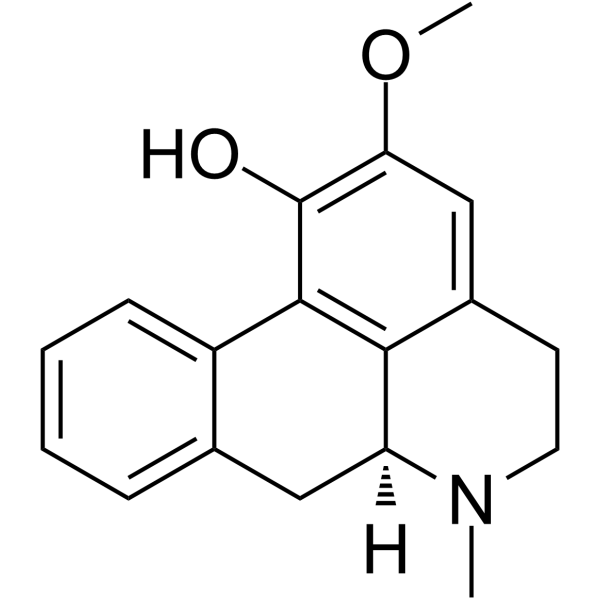
Lirinidine
CAS No. 54383-28-7
Lirinidine( —— )
Catalog No. M29183 CAS No. 54383-28-7
(+)-Lirinidine has antioxidative activity, and it can significantly inhibit the proliferation of melanoma cells; it also shows potent inhibition of melanogenesis.
Purity : >98% (HPLC)
 COA
Datasheet
HNMR
HPLC
MSDS
Handing Instructions
COA
Datasheet
HNMR
HPLC
MSDS
Handing Instructions
| Size | Price / USD | Stock | Quantity |
| 1 mL x 10 mM in DMSO | 181 | In Stock |


|
| 5MG | 160 | In Stock |
|
| 10MG | 238 | In Stock |
|
| 25MG | 397 | In Stock |
|
| 50MG | 579 | In Stock |
|
| 100MG | Get Quote | In Stock |
|
| 200MG | Get Quote | In Stock |
|
| 500MG | Get Quote | In Stock |
|
| 1G | Get Quote | In Stock |
|
Biological Information
-
Product NameLirinidine
-
NoteResearch use only, not for human use.
-
Brief Description(+)-Lirinidine has antioxidative activity, and it can significantly inhibit the proliferation of melanoma cells; it also shows potent inhibition of melanogenesis.
-
Description(+)-Lirinidine has antioxidative activity, and it can significantly inhibit the proliferation of melanoma cells; it also shows potent inhibition of melanogenesis. Lirinidine exhibits significant inhibition of collagen, arachidonic acid and platelet-activating factor-induced platelet aggregation.(In Vitro):Sixteen compounds were extracted and purified from the leaves of Liriodendron tulipifera. These compounds include aporphines, oxoaporphine, coumarin, sesquiterpene lactone, benzenoids, cyclitol and steroids. (+)-Norstephalagine (2) (an aporphine) and scopoletin (8) (a coumarin) were isolated from Liriodendron tulipifera leaves from the first time. The identified compounds were screened for their antiradical scavenging, metal chelating and ferric reducing power activities. The results have showed that these compounds have antioxidative activity. The study has also examined the chemopreventive property of the isolated compounds against human melanoma cells A375. The results showed that (-)-anonaine (1), (-)-liridinine (3), (+)-Lirinidine (6), lysicamine (7) and epitulipinolide diepoxide (9) significantly inhibited the proliferation of melanoma cells.
-
In Vitro——
-
In Vivo——
-
Synonyms——
-
PathwayOthers
-
TargetOther Targets
-
Recptor——
-
Research Area——
-
Indication——
Chemical Information
-
CAS Number54383-28-7
-
Formula Weight281.355
-
Molecular FormulaC18H19NO2
-
Purity>98% (HPLC)
-
Solubility——
-
SMILESCOc1cc2CCN(C)[C@H]3Cc4ccccc4-c(c1O)c23
-
Chemical Name——
Shipping & Storage Information
-
Storage(-20℃)
-
ShippingWith Ice Pack
-
Stability≥ 2 years
Reference
molnova catalog



related products
-
Prosaikogenin D
Prosaikogenin D is a natural product extracted from the roots of Buleurum bicaule Helm (Apiaceae) with anti-cancer activity.
-
Cilazapril Monohydra...
Cilazapril Monohydrate is an angiotensin-converting enzyme (ACE) inhibitor used for the treatment of hypertension and congestive heart failure.
-
EPZ033294
EPZ033294 has potential anticancer and antiproliferative activity.
