


 Cart
Cart
 sales@molnova.com



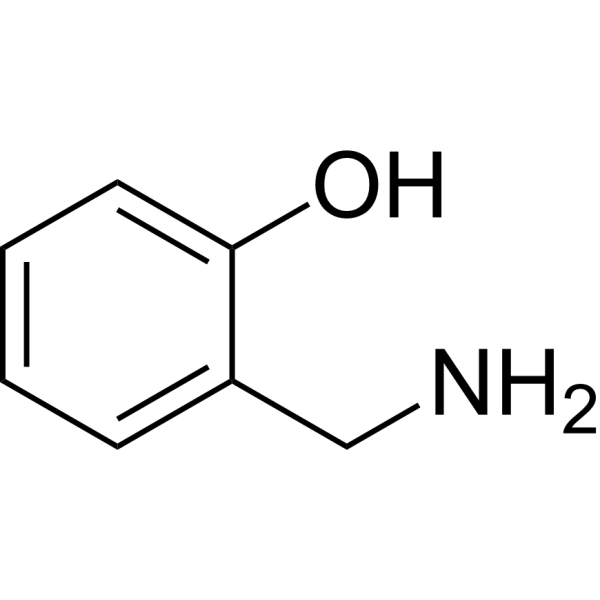
2-Hydroxybenzylamine
CAS No. 932-30-9
2-Hydroxybenzylamine( —— )
Catalog No. M28366 CAS No. 932-30-9
2-Hydroxybenzylamine, a potent small molecule scavenger of IsoLGs, sequesters the reactive species as inert adducts.
Purity : >98% (HPLC)
 COA
Datasheet
HNMR
HPLC
MSDS
Handing Instructions
COA
Datasheet
HNMR
HPLC
MSDS
Handing Instructions
| Size | Price / USD | Stock | Quantity |
| 1 mL x 10 mM in DMSO | 28 | In Stock |


|
| 100MG | Get Quote | In Stock |
|
| 200MG | Get Quote | In Stock |
|
| 500MG | 32 | In Stock |
|
| 1G | 51 | In Stock |
|
Biological Information
-
Product Name2-Hydroxybenzylamine
-
NoteResearch use only, not for human use.
-
Brief Description2-Hydroxybenzylamine, a potent small molecule scavenger of IsoLGs, sequesters the reactive species as inert adducts.
-
Description2-Hydroxybenzylamine, a potent small molecule scavenger of IsoLGs, sequesters the reactive species as inert adducts. 2-Hydroxybenzylamine may be used to decrease early recurrence of atrial fibrillation and other atrial arrhythmias following atrial fibrillation ablation by decreasing IsoLG adducts with native biomolecules.(In Vivo):Compared to hypercholesterolemic Ldlr-/- mice treated with vehicle or 4-Hydroxybenzylamine, a nonreactive analogue, 2-Hydroxybenzylamine decreases atherosclerosis by 60% in en face aortas, without changing plasma cholesterol. Ldlr-/- mice treated with 2-Hydroxybenzylamine have reduced MDA-LDL and MDA-HDL levels, and their HDL display increased capacity to reduce macrophage cholesterol. Importantly, 2-Hydroxybenzylamine reduces the MDA- and IsoLG-lysyl content in atherosclerotic aortas versus 4-Hydroxybenzylamine. Furthermore, 2-Hydroxybenzylamine reduces inflammation and plaque apoptotic cells and promotes efferocytosis and features of stable plaques. Dicarbonyl scavenging with 2-Hydroxybenzylamine has multiple atheroprotective effects in a murine FH model.
-
In Vitro——
-
In Vivo——
-
Synonyms——
-
PathwayOthers
-
TargetOther Targets
-
RecptorSIRT1
-
Research Area——
-
Indication——
Chemical Information
-
CAS Number932-30-9
-
Formula Weight123.155
-
Molecular FormulaC7H9NO
-
Purity>98% (HPLC)
-
SolubilityIn Vitro:?DMSO : 50 mg/mL (406.01 mM)
-
SMILESNCc1ccccc1O
-
Chemical Name——
Shipping & Storage Information
-
Storage(-20℃)
-
ShippingWith Ice Pack
-
Stability≥ 2 years
Reference
1.Arunasree M Kalle, et al. Inhibition of SIRT1 by a small molecule induces apoptosis in breast cancer cells. Biochem Biophys Res Commun. 2010 Oct 8;401(1):13-9.
molnova catalog



related products
-
m-PEG12-OH
m-PEG12-OH is a PEG-based PROTAC linker that can be used in the synthesis of PROTACs.
-
Sapienic acid sodium
Sapienic acid sodium is a fatty acid commonly. It has variable antimicrobial activities against Gram-positive and Gram-negative bacteria found on the skin and in the oral cavity.
-
UDP-a-D-Galactose di...
UDP-a-D-Galactose disodium salt is a donor substrate for galactosyltransferases employed in the biosynthesis of galactose-containing oligosaccharides.
