


 Cart
Cart
 sales@molnova.com



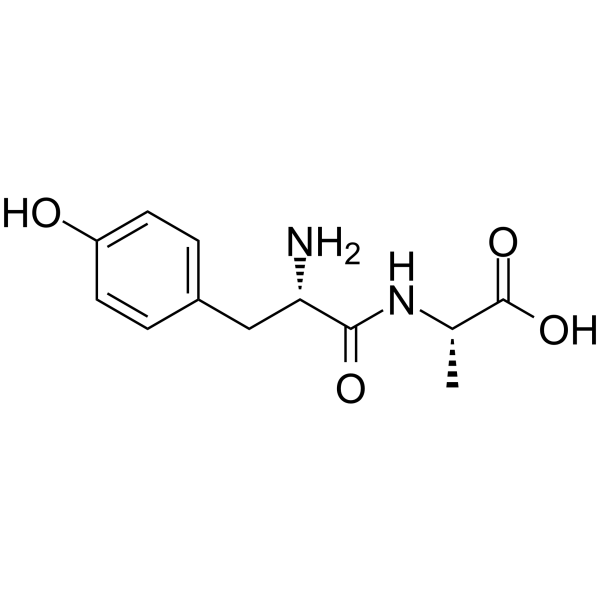
H-Tyr-Ala-OH
CAS No. 730-08-5
H-Tyr-Ala-OH( Tyrosylalanine )
Catalog No. M28335 CAS No. 730-08-5
H-Tyr-Ala-OH (Tyrosylalanine) is a L-tyrosine- and L-alanine-containing dipeptide .
Purity : >98% (HPLC)
 COA
Datasheet
HNMR
HPLC
MSDS
Handing Instructions
COA
Datasheet
HNMR
HPLC
MSDS
Handing Instructions
| Size | Price / USD | Stock | Quantity |
| 25MG | 36 | In Stock |


|
| 50MG | 52 | In Stock |
|
| 100MG | Get Quote | In Stock |
|
| 200MG | Get Quote | In Stock |
|
| 500MG | Get Quote | In Stock |
|
| 1G | Get Quote | In Stock |
|
Biological Information
-
Product NameH-Tyr-Ala-OH
-
NoteResearch use only, not for human use.
-
Brief DescriptionH-Tyr-Ala-OH (Tyrosylalanine) is a L-tyrosine- and L-alanine-containing dipeptide .
-
DescriptionH-Tyr-Ala-OH (Tyrosylalanine) is a L-tyrosine- and L-alanine-containing dipeptide .
-
In Vitro——
-
In Vivo——
-
SynonymsTyrosylalanine
-
PathwayOthers
-
TargetOther Targets
-
Recptor——
-
Research Area——
-
Indication——
Chemical Information
-
CAS Number730-08-5
-
Formula Weight252.27
-
Molecular FormulaC12H16N2O4
-
Purity>98% (HPLC)
-
SolubilityIn Vitro:?H2O : 125 mg/mL (495.50 mM)
-
SMILESC[C@H](NC(=O)[C@@H](N)Cc1ccc(O)cc1)C(O)=O
-
Chemical Name——
Shipping & Storage Information
-
Storage(-20℃)
-
ShippingWith Ice Pack
-
Stability≥ 2 years
Reference
1.Ebihara A, Fujimura A. Metabolites of antihypertensive drugs. An updated review of their clinical pharmacokinetic and therapeutic implications. Clin Pharmacokinet. 1991 Nov;21(5):331-43. Review.
molnova catalog



related products
-
Pancreatic Polypepti...
Pancreatic Polypeptide, avian
-
I-152
I-152, a conjugate of N-acetyl-cysteine (NAC) and cysteamine (MEA), activates NRF2 and ATF4 signaling pathways and exhibits anti-proliferative properties .
-
Tetroquinone
Tetrahydroxy-1,4-benzoquinone, also called tetrahydroxy-p-benzoquinone, tetrahydroxybenzoquinone, or tetrahydroxyquinone (THBQ, THQ), is an organic compound with formula C6O2(OH)4.
