


 Cart
Cart
 sales@molnova.com



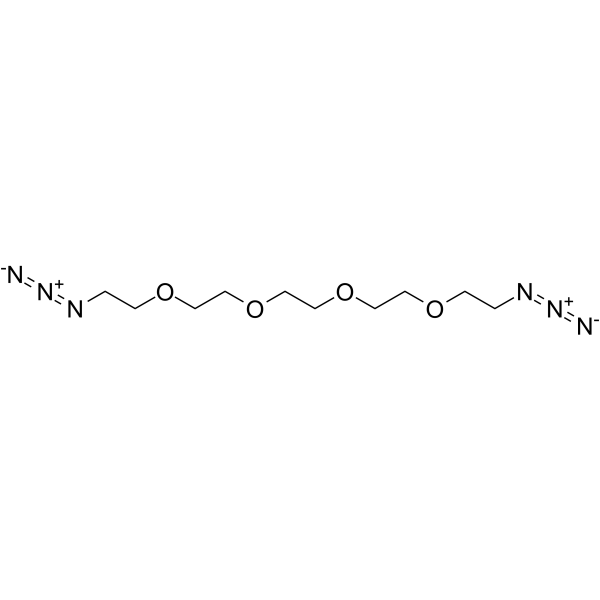
Azido-PEG4-azide
CAS No. 182760-73-2
Azido-PEG4-azide( —— )
Catalog No. M28216 CAS No. 182760-73-2
Azido-PEG4-azide is a PEG-based PROTAC linker that can be used to synthesize PROTACs.
Purity : >98% (HPLC)
 COA
Datasheet
HNMR
HPLC
MSDS
Handing Instructions
COA
Datasheet
HNMR
HPLC
MSDS
Handing Instructions
| Size | Price / USD | Stock | Quantity |
| 5MG | 29 | In Stock |


|
| 10MG | 38 | In Stock |
|
| 25MG | 61 | In Stock |
|
| 50MG | 86 | In Stock |
|
| 100MG | 126 | In Stock |
|
| 200MG | 215 | In Stock |
|
| 500MG | Get Quote | In Stock |
|
| 1G | Get Quote | In Stock |
|
Biological Information
-
Product NameAzido-PEG4-azide
-
NoteResearch use only, not for human use.
-
Brief DescriptionAzido-PEG4-azide is a PEG-based PROTAC linker that can be used to synthesize PROTACs.
-
DescriptionAzido-PEG4-azide is a PEG-based PROTAC linker that can be used to synthesize PROTACs.(In Vitro):PROTACs contain two different ligands connected by a linker; one is a ligand for an E3 ubiquitin ligase and the other is for the target protein.
-
In VitroPROTACs contain two different ligands connected by a linker; one is a ligand for an E3 ubiquitin ligase and the other is for the target protein. PROTACs exploit the intracellular ubiquitin-proteasome system to selectively degrade target proteins.
-
In Vivo——
-
Synonyms——
-
PathwayOthers
-
TargetOther Targets
-
RecptorFungal
-
Research Area——
-
Indication——
Chemical Information
-
CAS Number182760-73-2
-
Formula Weight288.308
-
Molecular FormulaC10H20N6O4
-
Purity>98% (HPLC)
-
Solubility——
-
SMILES[N-]=[N+]=NCCOCCOCCOCCOCCN=[N+]=[N-]
-
Chemical Name——
Shipping & Storage Information
-
Storage(-20℃)
-
ShippingWith Ice Pack
-
Stability≥ 2 years
Reference
1.Matazaemon Uchida, et al. Effect of a Rice Blast Controlling Agent, Isoprothiolane, on Nilaparvata Lugens Stal with Different Levels of Susceptibility to Diazinon. Pest Resistance to Pesticides pp 421-428
molnova catalog



related products
-
L-Histidine benzyl e...
L-Histidine benzyl ester bistosylate could play a role in the activation of HutP (an RNA-binding protein) .
-
SLV319
SLV319 has been used in trials studying the treatment of Obesity and Obesity and Type 2 Diabetes.
-
(3R,5R)-1-(4-Hydroxy...
(3R,5R)-1-(4-Hydroxy-3-methoxyphenyl)-7-phenylheptane-3,5-diol (compound 20) is a plant metabolite that can be isolated from Zingiberaceae plants.
