


 Cart
Cart
 sales@molnova.com



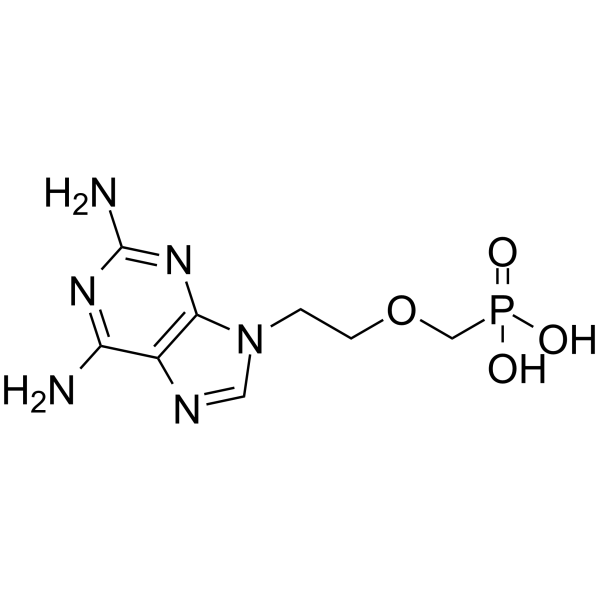
PMEDAP
CAS No. 113852-41-8
PMEDAP( —— )
Catalog No. M28188 CAS No. 113852-41-8
PMEDAP is a potent inhibitor of Moloney murine sarcoma virus (MSV)-induced tumor formation and associated mortality and an inhibitor of human immunodeficiency virus (HIV) replication. PMEDAP also has anti-murine cytomegalovirus (MCMV) activity.
Purity : >98% (HPLC)
 COA
Datasheet
HNMR
HPLC
MSDS
Handing Instructions
COA
Datasheet
HNMR
HPLC
MSDS
Handing Instructions
| Size | Price / USD | Stock | Quantity |
| 2MG | 40 | In Stock |


|
| 5MG | 65 | In Stock |
|
| 10MG | 102 | In Stock |
|
| 25MG | 226 | In Stock |
|
| 50MG | 354 | In Stock |
|
| 100MG | 533 | In Stock |
|
| 200MG | 724 | In Stock |
|
| 500MG | Get Quote | In Stock |
|
| 1G | Get Quote | In Stock |
|
Biological Information
-
Product NamePMEDAP
-
NoteResearch use only, not for human use.
-
Brief DescriptionPMEDAP is a potent inhibitor of Moloney murine sarcoma virus (MSV)-induced tumor formation and associated mortality and an inhibitor of human immunodeficiency virus (HIV) replication. PMEDAP also has anti-murine cytomegalovirus (MCMV) activity.
-
DescriptionPMEDAP is a potent inhibitor of Moloney murine sarcoma virus (MSV)-induced tumor formation and associated mortality and an inhibitor of human immunodeficiency virus (HIV) replication. PMEDAP also has anti-murine cytomegalovirus (MCMV) activity.(In Vivo):In Three-week-old male NMRI mice inoculated with MSV, PMEDAP (0.25-5 mg/kg; IP; daily;) effected a significant delay in tumor appearance and an enhancement of the survival rate of tumor-bearing mice. PMEDAP also suppressed tumor formation and mortality in a dose-dependent manner.
-
In Vitro——
-
In VivoPMEDAP (0.25-5 mg/kg; IP; daily; starting on the day of MSV-infected and continuing for an additional four days) causes a dose-dependent suppression of tumor formation and mortality in newborn mice inoculated with MSV. Animal Model:Three-week-old male NMRI mice Dosage:0.25 mg/kg, 1 mg/kg, 5 mg/kg Administration:IP; daily; starting on the day of infection and continuing for an additional four days Result:Effected a significant delay in tumor appearance and an enhancement of the survival rate of tumor-bearing mice.
-
Synonyms——
-
PathwayOthers
-
TargetOther Targets
-
Recptor——
-
Research Area——
-
Indication——
Chemical Information
-
CAS Number113852-41-8
-
Formula Weight288.2
-
Molecular FormulaC8H13N6O4P
-
Purity>98% (HPLC)
-
SolubilityIn Vitro:?0.1 M NaOH : 14.29 mg/mL (49.)
-
SMILESNc1c2ncn(CCOCP(O)(O)=O)c2nc(N)n1
-
Chemical Name——
Shipping & Storage Information
-
Storage(-20℃)
-
ShippingWith Ice Pack
-
Stability≥ 2 years
Reference
1.Strupp C, Quesnot N, Richert L, Moore J, Bomann WH, Singh P. Weight of evidence and human relevance evaluation of the benfluralin mode of action in rodents (Part I): Liver carcinogenesis. Regul Toxicol Pharmacol. 2020 Nov;117:104758.
molnova catalog



related products
-
2-Methyl-1-propanol
Isobutanol is an aliphatic alcohol?is widely used in industry as a solvent in chemical reactions as well as being a useful starting material for organic synthesis.?
-
3-(4-prop-2-en-1-ylp...
3-(4-prop-2-en-1-ylpiperazin-1-yl)quinox Antagonism to 2-methyl-5-HT induced contractions in guinea pig ileum
-
Microhelenin C
Microhelenin C has significant antileukemic activity.
