


 Cart
Cart
 sales@molnova.com



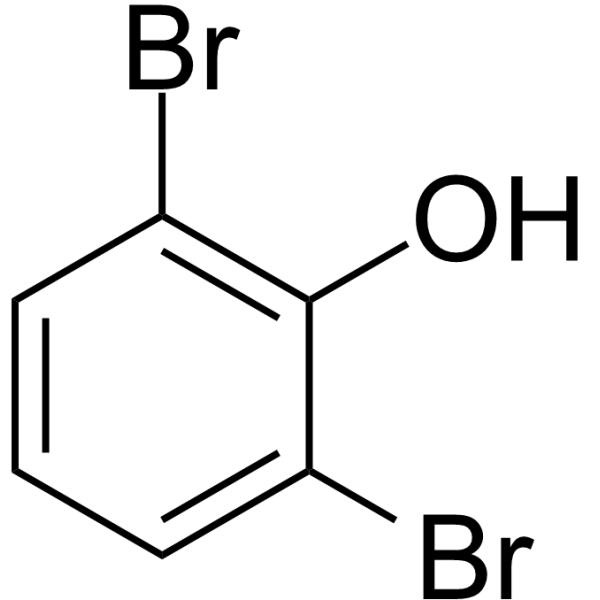
2,6-Dibromophenol
CAS No. 608-33-3
2,6-Dibromophenol( 2,6-Dibromo-phenol )
Catalog No. M28154 CAS No. 608-33-3
2,6-Dibromophenol is extracted from the skin and muscle of flatfish.
Purity : >98% (HPLC)
 COA
Datasheet
HNMR
HPLC
MSDS
Handing Instructions
COA
Datasheet
HNMR
HPLC
MSDS
Handing Instructions
| Size | Price / USD | Stock | Quantity |
| 1 mL x 10 mM in DMSO | 28 | In Stock |


|
| 100MG | Get Quote | In Stock |
|
| 200MG | Get Quote | In Stock |
|
| 500MG | Get Quote | In Stock |
|
| 1G | 27 | In Stock |
|
Biological Information
-
Product Name2,6-Dibromophenol
-
NoteResearch use only, not for human use.
-
Brief Description2,6-Dibromophenol is extracted from the skin and muscle of flatfish.
-
Description2,6-Dibromophenol is extracted from the skin and muscle of flatfish.
-
In Vitro——
-
In Vivo——
-
Synonyms2,6-Dibromo-phenol
-
PathwayProteasome/Ubiquitin
-
TargetEndogenous Metabolite
-
RecptorNK3
-
Research Area——
-
Indication——
Chemical Information
-
CAS Number608-33-3
-
Formula Weight251.9
-
Molecular FormulaC6H4Br2O
-
Purity>98% (HPLC)
-
SolubilityIn Vitro:?DMSO : 100 mg/mL (396.98 mM)
-
SMILESBrC1=CC=CC(Br)=C1O
-
Chemical Name——
Shipping & Storage Information
-
Storage(-20℃)
-
ShippingWith Ice Pack
-
Stability≥ 2 years
Reference
1.Medhurst AD, et, al. In vitro and in vivo characterization of NK3 receptors in the rabbit eye by use of selective non-peptide NK3 receptor antagonists. Br J Pharmacol. 1997 Oct;122(3):469-76.
molnova catalog



related products
-
Tuftsin
Tuftsin is a tetrapeptide (Thr-Lys-Pro-Arg) that specifically binds monocytes, macrophages, and polymorphonuclear leukocytes and potentiates their natural killer activity against tumors and pathogens.
-
1-Naphthol
1-Naphthol is an excited state proton transfer (ESPT) fluorescent molecular probe for sensing thermotropic microenvironmental changes of pluronic F127 in aqueous media.
-
Darusentan
Darusentan is a potent inhibitor of endothelin signaling and function in both large and small arteries.
