


 Cart
Cart
 sales@molnova.com



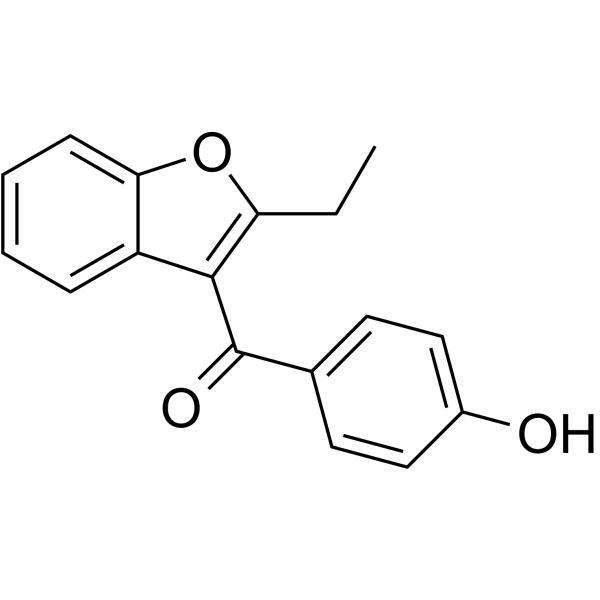
Benzarone
CAS No. 1477-19-6
Benzarone( Benzaronum | Benzarona | Vasoc | Venagil )
Catalog No. M27289 CAS No. 1477-19-6
Benzarone is a potent inhibitor of human uric acid transporter 1 (URAT1, IC50 = 2.8 μM in oocyte).
Purity : >98% (HPLC)
 COA
Datasheet
HNMR
HPLC
MSDS
Handing Instructions
COA
Datasheet
HNMR
HPLC
MSDS
Handing Instructions
| Size | Price / USD | Stock | Quantity |
| 1 mL x 10 mM in DMSO | 28 | In Stock |


|
| 100MG | Get Quote | In Stock |
|
| 200MG | Get Quote | In Stock |
|
| 500MG | 36 | In Stock |
|
| 1G | 44 | In Stock |
|
Biological Information
-
Product NameBenzarone
-
NoteResearch use only, not for human use.
-
Brief DescriptionBenzarone is a potent inhibitor of human uric acid transporter 1 (URAT1, IC50 = 2.8 μM in oocyte).
-
DescriptionBenzarone is a potent inhibitor of human uric acid transporter 1 (URAT1, IC50 = 2.8 μM in oocyte). Benzarone lowers the level of uric acid serum.(In Vitro):Studies on the action of benzarone on the metabolism of cultured arterial smooth muscle cells and arterial tissue had the following results: 1. On incubation of calf arterial tissue in the presence of 0.03--0.1 mmol/l benzarone (8--26 micrograms/ml medium) the metabolic transformation of [14C]-glucose to [14C]-lactate and 14CO2 and the incorporation of 14C radioactivity into the total lipids is not significantly altered as compared with control values. In cultured human arterial smooth muscle cells 0.03 mmol/l benzarone stimulates the incorporation of [14C]-acetate and [3H]-palmitate into the cellular lipids while the receptor mediated uptake of homologous low-density lipoproteins (LDL) by the cells and their release are not influenced. 2. In concentrations greater than 0.2 mmol/l benzarone the glucose utilisation of arterial tissue is enhanced, while the labelling of lipids, in particular the labelling of the triglyceride fraction, is depressed. Under the same conditions the protein biosynthesis and the incorporation of [14C]-acetate and [3H]-palmitate into the total lipids of cultured arterial smooth muscle cells are decreased.(In Vivo):Rats of BD X strain and SHR/NIH Montreal Ingelheim strain (genetic hypertension) received a diet containing 3.9% cholesterol or 3.7% cholesterol plus 0.6% benzarone, respectively, and libitum for 5 or 9 months. The following chemical and ultrastructural results were obtained. 1. The cholesterol-benzarone diet causes a body weight reduction of 10%, a relative increase of serum HDL and a corresponding decrease of serum LDL and VLDL, as compared with the effects of the cholesterol diet. No differences of total serum cholesterol and serum triglycerides between the two groups were observed. 2. The aorta of cholesterol fed animals shows a slight but statistically not significant increase of total cholesterol content. 3. No differences in the composition of connective tissue components (collagen, elastin, uronic acid content) between the cholesterol fed animals and a control group on normal diet could be detected. 4. Electron micrographs of several vessel wall areas from cholesterol fed hypertensive animals revealed fibrosis, necrosis of media muscle cells and an increase of matrix vesicles. Severe damages were found in coronary arteries and in the caudal arteries. 5. Cholesterol feeding of hypertensive rats increases the cholesterol content of liver 10fold and the triglycerides content 3fold as compared with liver lipids of control rats. Benzarone application to cholesterol fed rats effects a statistically significant decrease of liver cholesterol and triglycerides.
-
In Vitro——
-
In Vivo——
-
SynonymsBenzaronum | Benzarona | Vasoc | Venagil
-
PathwayOthers
-
TargetOther Targets
-
Recptor——
-
Research Area——
-
Indication——
Chemical Information
-
CAS Number1477-19-6
-
Formula Weight266.296
-
Molecular FormulaC17H14O3
-
Purity>98% (HPLC)
-
SolubilityIn Vitro:?DMSO : ≥ 100 mg/mL (375.52 mM)
-
SMILESCCc1oc2ccccc2c1C(=O)c1ccc(O)cc1
-
Chemical Name——
Shipping & Storage Information
-
Storage(-20℃)
-
ShippingWith Ice Pack
-
Stability≥ 2 years
Reference
1.Perovani IS, et al. Enantioselective in vitro metabolism and in vitro-in vivo correlation of the herbicide ethofumesate in a human model. J Pharm Biomed Anal. 2020;187:113349.
molnova catalog



related products
-
Ademetionine(b)
Ademetionine is an intermediate metabolite of methioninefor treatment of primary biliary cirrhosis and major depressive disorder.
-
Hydrocortisone 21-he...
Hydrocortisone 21-hemisuccinate is a corticosteroid used as an analytical and chromatography reagent.
-
Malabaricone C
Malabaricone C is a bioactive chemical.
