


 Cart
 sales@molnova.com




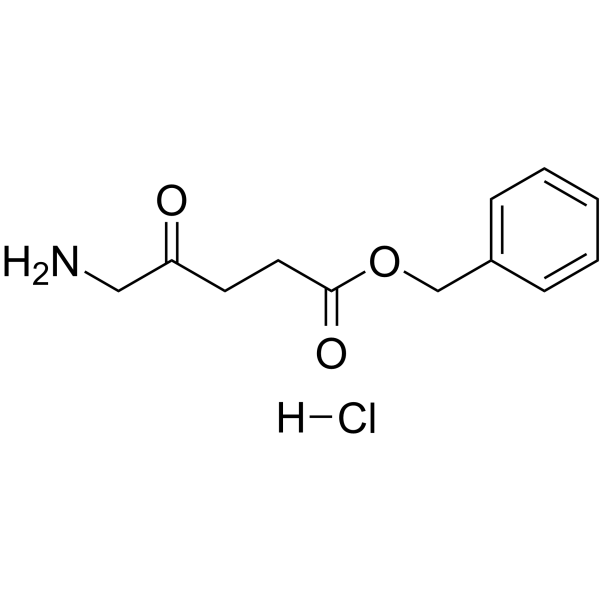
5-ALA benzyl ester hydrochloride
CAS No. 163271-32-7
5-ALA benzyl ester hydrochloride( Benzyl-ALA hydrochloride )
Catalog No. M27058 CAS No. 163271-32-7
5-ALA benzyl ester hydrochloride is a protoporphyrin precursor and can be used as a photodetection agent.
Purity : >98% (HPLC)
 COA
Datasheet
HNMR
HPLC
MSDS
Handing Instructions
| Size | Price / USD | Stock | Quantity |
| 1 mL x 10 mM in DMSO | 54 | In Stock |


|
| 5MG | 29 | In Stock |
|
| 10MG | 48 | In Stock |
|
| 25MG | 80 | In Stock |
|
| 50MG | 114 | In Stock |
|
| 100MG | 169 | In Stock |
|
| 200MG | 250 | In Stock |
|
| 500MG | 424 | In Stock |
|
| 1G | Get Quote | In Stock |
|
Biological Information
-
Product Name5-ALA benzyl ester hydrochloride
-
NoteResearch use only, not for human use.
-
Brief Description5-ALA benzyl ester hydrochloride is a protoporphyrin precursor and can be used as a photodetection agent.
-
Description5-ALA benzyl ester hydrochloride is a protoporphyrin precursor and can be used as a photodetection agent.(In Vitro):In colon carcinoma cell lines SW480, 5-ALA benzyl ester hydrochloride (0.6-0.12 mM; 3h) induces PPIX accumulation.(In Vivo):In female CBA/Gy mice, 5-ALA benzyl ester hydrochloride (31 mg/kg; i.v.; 1h) results in a dose-dependent reduction in tumour porphyrin levels.
-
In Vitro5-ALA benzyl ester hydrochloride (Benzyl-ALA hydrochloride) (0.6-0.12 mM; 3 h) induces protoporphyrin IX (PPIX) accumulation in colon carcinoma cell lines SW480.
-
In VivoReducing the dose of 5-ALA benzyl ester hydrochloride (31 mg/kg; i.v. ; 1 hours) results in a dose-dependent reduction in tumour porphyrin levels. Animal Model:Female CBA/Gy mouse (CaNT tumour model)Dosage:31 mg/kg Administration:i.v. ; 1 hours Result:Reducing the dose of 5-ALA benzyl ester hydrochloride resulted in a dose-dependent reduction in the concentration of porphyrins accumulating in the CaNT tumour.
-
SynonymsBenzyl-ALA hydrochloride
-
PathwayOthers
-
TargetOther Targets
-
RecptorCytochrome C
-
Research Area——
-
Indication——
Chemical Information
-
CAS Number163271-32-7
-
Formula Weight257.71
-
Molecular FormulaC12H16ClNO3
-
Purity>98% (HPLC)
-
SolubilityIn Vitro:?DMSO : 250 mg/mL (970.08 mM)
-
SMILESCl.NCC(=O)CCC(=O)OCc1ccccc1
-
Chemical Name——
Shipping & Storage Information
-
Storage(-20℃)
-
ShippingWith Ice Pack
-
Stability≥ 2 years
Reference
1.Santucci R, et al. Cytochrome c: An extreme multifunctional protein with a key role in cell fate. Int J Biol Macromol. 2019 Sep 1;136:1237-1246.
molnova catalog


related products
-
Gymnoside IX
Gymnoside IX (compound 2) can be isolated from the methanolic extract from the tubers of Gymnadenia conopsea.
-
7-Ketologanin
7-Ketologanin is an iridoid glucoside. 7-Ketologanin can be isolated from the Stems of Viburnum erosum. 7-Ketologanin involves in biosynthetic pathway of oleuropein. Oleuropein, is a bioactive phenolic compound, modulates several oncogenic signalling pathways.
-
4-Hydroxy-2,4-dimeth...
4'-Hydroxy-2,4-dimethoxychalcone is a naturally occurring chalcone derivative from the herbal resin of the red geranium Dragon's Blood.4'-Hydroxy-2,4-dimethoxychalcone possesses a wide range of biological activities including anti-malarial, anti-bacterial, anti-fungal, and anti-protozoa activity.
