


 Cart
Cart
 sales@molnova.com



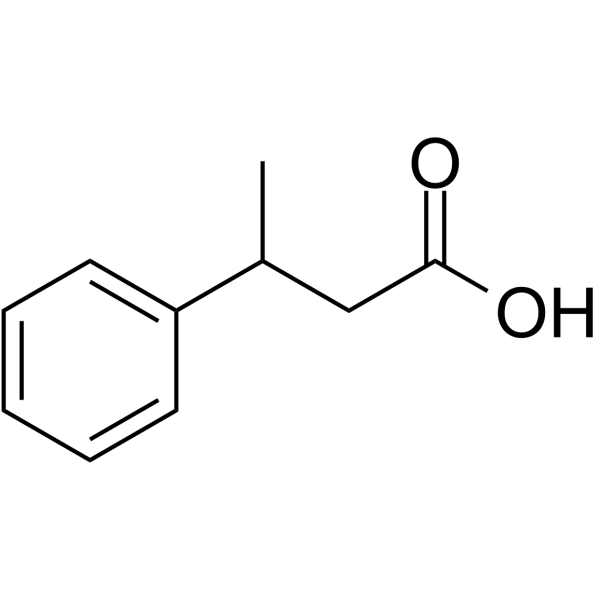
3-Phenylbutyric acid
CAS No. 4593-90-2
3-Phenylbutyric acid( —— )
Catalog No. M27054 CAS No. 4593-90-2
3-Phenylbutyric acid isolates Rhodococcus rhodochrous PB1 from compost soil and is metabolized by initial oxidation of the benzene ring and by initial oxidation of the side chain.
Purity : >98% (HPLC)
 COA
Datasheet
HNMR
HPLC
MSDS
Handing Instructions
COA
Datasheet
HNMR
HPLC
MSDS
Handing Instructions
| Size | Price / USD | Stock | Quantity |
| 100MG | Get Quote | In Stock |


|
| 200MG | Get Quote | In Stock |
|
| 500MG | 33 | In Stock |
|
| 1G | 45 | In Stock |
|
Biological Information
-
Product Name3-Phenylbutyric acid
-
NoteResearch use only, not for human use.
-
Brief Description3-Phenylbutyric acid isolates Rhodococcus rhodochrous PB1 from compost soil and is metabolized by initial oxidation of the benzene ring and by initial oxidation of the side chain.
-
Description3-Phenylbutyric acid isolates Rhodococcus rhodochrous PB1 from compost soil and is metabolized by initial oxidation of the benzene ring and by initial oxidation of the side chain.
-
In Vitro——
-
In Vivo——
-
Synonyms——
-
PathwayOthers
-
TargetOther Targets
-
Recptorprogesterone receptor
-
Research Area——
-
Indication——
Chemical Information
-
CAS Number4593-90-2
-
Formula Weight164.204
-
Molecular FormulaC10H12O2
-
Purity>98% (HPLC)
-
SolubilityIn Vitro:?DMSO : 100 mg/mL (609.01 mM)
-
SMILESCC(CC(O)=O)c1ccccc1
-
Chemical Name——
Shipping & Storage Information
-
Storage(-20℃)
-
ShippingWith Ice Pack
-
Stability≥ 2 years
Reference
1.Griesinger G, et al. Dydrogesterone as an oral alternative to vaginal progesterone for IVF luteal phase support: A systematic review and individual participant data meta-analysis. PLoS One. 2020 Nov 4;15(11):e0241044.
molnova catalog



related products
-
Iperoxo
Iperoxo, an OxotremorineM analog, is a muscarinic acetylcholine receptors superagonist.
-
Neuronostatin-13 (mo...
Neuronostatin-13 (mouse, rat)
-
Sodium citrate
Sodium citrate (Natrocitral) is the sodium salt of citric acid.Citric acid trisodium induces apoptosis and cell cycle arrest at G2/M phase and S phase.
