


 Cart
Cart
 sales@molnova.com



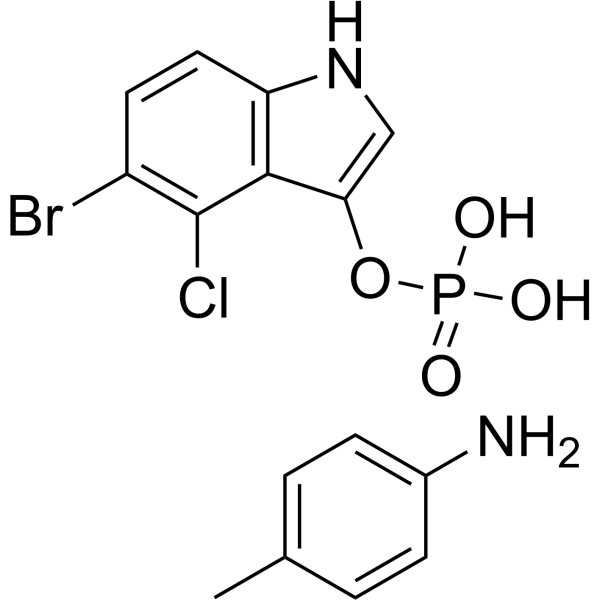
BCIP
CAS No. 6578-06-9
BCIP( BCIP p-toluidine salt | X-phosphate p-toluidine salt )
Catalog No. M27033 CAS No. 6578-06-9
BCIP (BCIP p-toluidine salt) is an artificial chromogenic substrate. It is used for the sensitive colorimetric detection of alkaline phosphatase activity.
Purity : >98% (HPLC)
 COA
Datasheet
HNMR
HPLC
MSDS
Handing Instructions
COA
Datasheet
HNMR
HPLC
MSDS
Handing Instructions
| Size | Price / USD | Stock | Quantity |
| 1 mL x 10 mM in DMSO | 28 | In Stock |


|
| 100MG | 29 | In Stock |
|
| 200MG | Get Quote | In Stock |
|
| 500MG | 127 | In Stock |
|
| 1G | Get Quote | In Stock |
|
Biological Information
-
Product NameBCIP
-
NoteResearch use only, not for human use.
-
Brief DescriptionBCIP (BCIP p-toluidine salt) is an artificial chromogenic substrate. It is used for the sensitive colorimetric detection of alkaline phosphatase activity.
-
DescriptionBCIP (BCIP p-toluidine salt) is an artificial chromogenic substrate. It is used for the sensitive colorimetric detection of alkaline phosphatase activity.
-
In Vitro——
-
In Vivo——
-
SynonymsBCIP p-toluidine salt | X-phosphate p-toluidine salt
-
PathwayOthers
-
TargetOther Targets
-
RecptorBacterial
-
Research Area——
-
Indication——
Chemical Information
-
CAS Number6578-06-9
-
Formula Weight433.62
-
Molecular FormulaC15H15BrClN2O4P
-
Purity>98% (HPLC)
-
SolubilityIn Vitro:?DMSO : ≥ 51 mg/mL (117.61 mM)
-
SMILESCc1ccc(N)cc1.OP(O)(=O)Oc1c[nH]c2ccc(Br)c(Cl)c12
-
Chemical Name——
Shipping & Storage Information
-
Storage(-20℃)
-
ShippingWith Ice Pack
-
Stability≥ 2 years
Reference
1.Soumendranath Chatterjee, et al. Antibacterial Activity of Long-Chain Primary Alcohols from Solena amplexicaulis Leaves. Proceedings of the Zoological Society volume 71, pages313-319(2018).
molnova catalog



related products
-
L-Aspartic acid pota...
L-aspartic acid potasium salt(VX-548) is an amino acid widely found in plants and animals.L-aspartic acid potasium salt drives the production of nitrogen oxides, which promotes phagocytosis and contributes to fish survival.
-
Terrestrosin D
Terrestrosin D can induce apoptotic cell death and inhibit angiogenesis in xenograft tumor cells, cell cycle arrest and induction of apoptosis in cancer cells and endothelial cells might be plausible mechanisms of actions for the observed antitumor and antiangiogenic activities of terrestrosin D.
-
Citronellyl isobutyr...
Citronellyl isobutyrate (3,7-dimethyloct-6-en-1-yl isobutyrate) is a RIFM fragrance used in perfumes.
