


 Cart
Cart
 sales@molnova.com



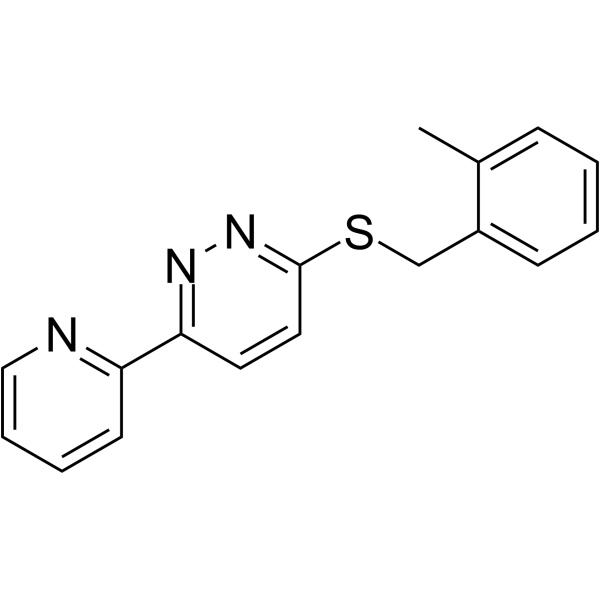
LDN-212320
CAS No. 894002-50-7
LDN-212320( LDN/OSU-0212320 | LDN-0212320 | OSU-0212320 )
Catalog No. M26737 CAS No. 894002-50-7
LDN-212320 is a glutamate transporter EAAT2 activator. It also enhances EAAT2 levels by > 6 fold at concentrations < 5 μM after 24 h.
Purity : >98% (HPLC)
 COA
Datasheet
HNMR
HPLC
MSDS
Handing Instructions
COA
Datasheet
HNMR
HPLC
MSDS
Handing Instructions
| Size | Price / USD | Stock | Quantity |
| 1 mL x 10 mM in DMSO | 54 | In Stock |


|
| 2MG | 31 | In Stock |
|
| 5MG | 49 | In Stock |
|
| 10MG | 85 | In Stock |
|
| 25MG | 179 | In Stock |
|
| 50MG | 291 | In Stock |
|
| 100MG | 454 | In Stock |
|
| 200MG | 649 | In Stock |
|
| 500MG | Get Quote | In Stock |
|
| 1G | Get Quote | In Stock |
|
Biological Information
-
Product NameLDN-212320
-
NoteResearch use only, not for human use.
-
Brief DescriptionLDN-212320 is a glutamate transporter EAAT2 activator. It also enhances EAAT2 levels by > 6 fold at concentrations < 5 μM after 24 h.
-
DescriptionLDN-212320 is a glutamate transporter EAAT2 activator. It also enhances EAAT2 levels by > 6 fold at concentrations < 5 μM after 24 h.(In Vitro):LDN/OSU-0212320 enhanced EAAT2 protein levels and glutamate uptake function but did not affect EAAT1 or EAAT3 protein levels and it also increased EAAT2 protein levels in a dose-dependent (EC50: 1.83 ± 0.27 μM) and time-dependent manner. LDN/OSU-0212320 treatment markedly prevented neuronal loss and degeneration, as assessed by MAP2 immunostaining .(In Vivo):After LDN/OSU-0212320(a single i.p.; 40-mg/kg) treatment, EAAT2 protein levels and associated glutamate uptake increased by approximately 1.5- to 2-fold at 2 hours and by approximately 2- to 3-fold between 8 and 24 hours after injection. Even 72 hours after injection, an approximately 1.5-fold increase in EAAT2 protein levels could still be detected (data not shown). LDN/OSU-0212320–induced EAAT2 protein levels and glutamate uptake was dose-dependent .
-
In Vitro——
-
In VivoLDN-212320 (10 or 20 mg/kg, i.p) significantly attenuates formalin-evoked nociceptive behavior. LDN-212320 (10 or 20 mg/kg, i.p) significantly reverses formalin-induced impaired hippocampal-dependent behavior. In addition, LDN-212320 (10 or 20 mg/kg, i.p) increases GLT-1 expressions in the hippocampus and ACC.LDN-212320 (20 mg/kg, i.p) significantly reduced formalin induced-ERK phosphorylation, a marker of nociception, in the hippocampus and ACC. Animal Model:Mice.Dosage:10 or 20 mg/kg.Administration:IP 24 h before the injection of formalin.Result:Significantly attenuated licking and biting behavior during both phases 1 and 2 in a dose-dependent manner compared to formalin-injected mice.Significantly (P < 0.01 or P < 0.001) reduced the licking and biting behavior.Significantly increased preference for the displaced object (F3, 13 = 28.03, P < 0.01) compared to formalin-injected mice.Significantly (P < 0.001) increased interaction time with the displaced object compared to formalin-injected mice.
-
SynonymsLDN/OSU-0212320 | LDN-0212320 | OSU-0212320
-
PathwayOthers
-
TargetOther Targets
-
RecptorNK2
-
Research Area——
-
Indication——
Chemical Information
-
CAS Number894002-50-7
-
Formula Weight293.39
-
Molecular FormulaC17H15N3S
-
Purity>98% (HPLC)
-
SolubilityIn Vitro:?DMSO : 50 mg/mL (170.42 mM)
-
SMILESCc1ccccc1CSc1ccc(nn1)-c1ccccn1
-
Chemical Name——
Shipping & Storage Information
-
Storage(-20℃)
-
ShippingWith Ice Pack
-
Stability≥ 2 years
Reference
1.Pluck G. Preliminary Validation of a Free-to-Use, Brief Assessment of Adult Intelligence for Research Purposes: The Matrix Matching Test. Psychol Rep. 2018 Jan 1:33294118762589.
molnova catalog



related products
-
3,4,7,8-Tetramethoxy...
3',4',7,8-Tetramethoxyflavone has antioxidant activity.
-
Disodium 5'-inosinat...
Inosine monophosphate or inosinic acid is the ribonucleotide of hypoxanthine and the first nucleotide formed during purine synthesis.
-
Amprolium
Amprolium? is a coccidiostat used in poultry, is a thiamine analogue and blocks the thiamine transporter of Eimeria species by blocking thiamine uptake it prevents carbohydrate synthesis.
