


 Cart
Cart
 sales@molnova.com



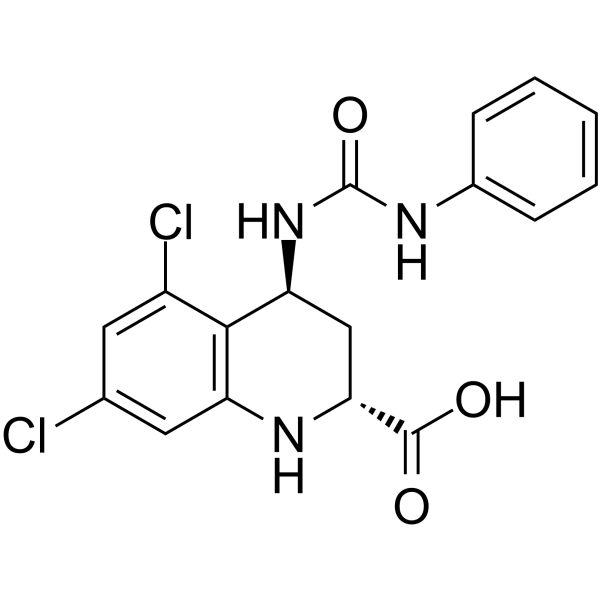
L-689560
CAS No. 139051-78-8
L-689560( —— )
Catalog No. M26733 CAS No. 139051-78-8
L-689560 is widely used as a radiolabeled ligand in binding studies and used to study the roles of NMDA receptors in normal neurological processes as well as in diseases.
Purity : >98% (HPLC)
 COA
Datasheet
HNMR
HPLC
MSDS
Handing Instructions
COA
Datasheet
HNMR
HPLC
MSDS
Handing Instructions
| Size | Price / USD | Stock | Quantity |
| 5MG | 447 | Get Quote |


|
| 10MG | 689 | Get Quote |
|
| 25MG | 1179 | Get Quote |
|
| 50MG | 1782 | Get Quote |
|
| 100MG | Get Quote | Get Quote |
|
| 200MG | Get Quote | Get Quote |
|
| 500MG | Get Quote | Get Quote |
|
| 1G | Get Quote | Get Quote |
|
Biological Information
-
Product NameL-689560
-
NoteResearch use only, not for human use.
-
Brief DescriptionL-689560 is widely used as a radiolabeled ligand in binding studies and used to study the roles of NMDA receptors in normal neurological processes as well as in diseases.
-
DescriptionL-689560 is widely used as a radiolabeled ligand in binding studies and used to study the roles of NMDA receptors in normal neurological processes as well as in diseases. At the GluN1 glycine binding site, L-689560 is an effective N-methyl-D-aspartate (NMDA) receptor antagonist.(In Vitro):The specific NMDA/glycine site blocker L-689560 (0.1–20 μm) impaired swimming rhythm generation and abolished NMDA-induced locomotor-like ventral root activity. d-serine (50 μm), an agonist at the NMDA/glycine site, increased the duration of skin stimulus-induced fictive swimming episodes, and produced slow modulations of burst frequency and amplitude. These effects of d-serine were reversed by L-689560.(In Vivo):L-689560 blocks the glycine-induced increase of Akt phosphorylation in the MCAO model. L-689560 (1 mg/kg, ip) obviously decreases the neuroprotective effect of glycine after glycine receptors, and the channel activity of NMDA receptors (NMDARs) are suppressed .
-
In VitroL-689560 is a 2-carboxytetrahydroquinoline antagonist.
-
In VivoL-689560 (1?mg/kg, ip) significantly reduces the neuroprotective effect of glycine after glycine receptors and the channel activity of NMDA receptors (NMDARs) are suppressed. L-689560 blocks glycine-induced increase of Akt phosphorylation in the MCAO model Animal Model:Adult male Sprague-Dawley (SD) rats middle cerebral artery occlusion (MCAO) modelDosage:1?mg/kg Administration:IPResult:Significantly reduced the neuroprotective effect of glycine after glycine receptors.
-
Synonyms——
-
PathwayMembrane Transporter/Ion Channel
-
TargetNMDAR
-
Recptor5-LOX| COX-1| COX-2
-
Research Area——
-
Indication——
Chemical Information
-
CAS Number139051-78-8
-
Formula Weight380.23
-
Molecular FormulaC17H15Cl2N3O3
-
Purity>98% (HPLC)
-
Solubility——
-
SMILESOC(=O)[C@H]1C[C@H](NC(=O)Nc2ccccc2)c2c(Cl)cc(Cl)cc2N1
-
Chemical Name——
Shipping & Storage Information
-
Storage(-20℃)
-
ShippingWith Ice Pack
-
Stability≥ 2 years
Reference
1.Lopes C, et al. Effect of tepoxalin on renal function and hepatic enzymes in dogs exposed to hypotension with isoflurane. Vet Anaesth Analg. 2014 Sep;41(5):459-67.
molnova catalog



related products
-
CIQ
CIQ is a subunit-selective potentiator of NMDA receptors containing the NR2C or NR2D subunit. EC50 value: 2.7 μM for NR2C and 2.8 μM for NR2D.
-
ALDH3A1-IN-1
ALDH3A1-IN-1 (Compound 18) is a potent ALDH3A1 inhibitor with an IC 50 of 1.61 μM. It is more effective than DEAB against patient-derived primary prostate tumor epithelial cells, both as a single agent and in combination with docetaxel .
-
Glypromate
Glypromate is a neuroprotective agent is a weak NMDA receptor agonist.
