


 Cart
Cart
 sales@molnova.com



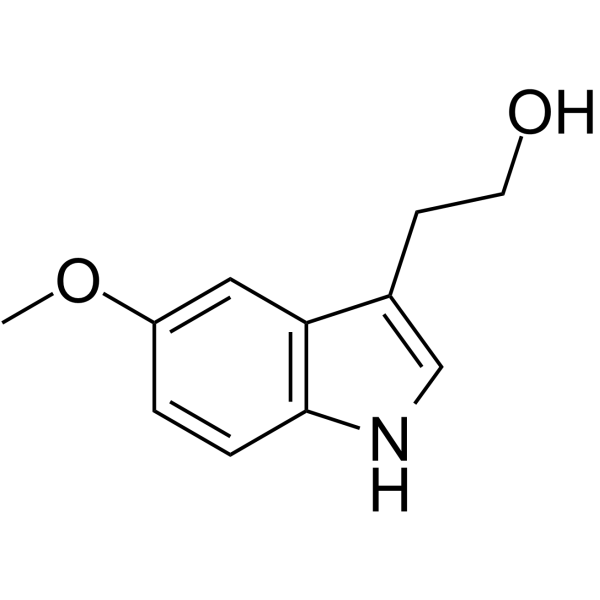
5-Methoxytryptophol
CAS No. 712-09-4
5-Methoxytryptophol( Methoxytryptophol | 2-(5-Methoxy-1H-indol-3-yl)ethanol )
Catalog No. M26544 CAS No. 712-09-4
5-Methoxytryptophol is a pineal indoleamine derived from serotonin shown to be biologically active in a number of species.
Purity : >98% (HPLC)
 COA
Datasheet
HNMR
HPLC
MSDS
Handing Instructions
COA
Datasheet
HNMR
HPLC
MSDS
Handing Instructions
| Size | Price / USD | Stock | Quantity |
| 1 mL x 10 mM in DMSO | 28 | In Stock |


|
| 50MG | 39 | In Stock |
|
| 100MG | 63 | In Stock |
|
| 200MG | Get Quote | In Stock |
|
| 500MG | Get Quote | In Stock |
|
| 1G | Get Quote | In Stock |
|
Biological Information
-
Product Name5-Methoxytryptophol
-
NoteResearch use only, not for human use.
-
Brief Description5-Methoxytryptophol is a pineal indoleamine derived from serotonin shown to be biologically active in a number of species.
-
Description5-Methoxytryptophol is a pineal indoleamine derived from serotonin shown to be biologically active in a number of species.(In Vitro):In MC3T3-E1 cells, most of the 5-methoxytryptophol doses reduced slightly the metabolic activity of osteoblasts. After 14 days of cell culture, Rankl mRNA levels were decreased. 5-methoxytryptophol also induced a high osteocalcin secretion and mineralization capacity. In RAW264.7 cells, 5-methoxytryptophol decreased the number of osteoclast formed and its activity. 5-methoxytryptophol promoted activation of the ERK1/2 pathway through the phosphorylation of ERK, while LUZ addition suppressed this effect. In conclusion, 5-methoxytryptophol inhibits osteoclastogenesis and promoting osteoblast differentiation.
-
In Vitro——
-
In Vivo——
-
SynonymsMethoxytryptophol | 2-(5-Methoxy-1H-indol-3-yl)ethanol
-
PathwayProteasome/Ubiquitin
-
TargetEndogenous Metabolite
-
RecptorNSD2-PWWP1
-
Research Area——
-
Indication——
Chemical Information
-
CAS Number712-09-4
-
Formula Weight191.23
-
Molecular FormulaC11H13NO2
-
Purity>98% (HPLC)
-
SolubilityIn Vitro:?DMSO : 100 mg/mL (522.93 mM)
-
SMILESCOc1ccc2[nH]cc(CCO)c2c1
-
Chemical Name——
Shipping & Storage Information
-
Storage(-20℃)
-
ShippingWith Ice Pack
-
Stability≥ 2 years
Reference
1.Dilworth D, et al. A chemical probe targeting the PWWP domain alters NSD2 nucleolar localization. Nat Chem Biol. 2022 Jan;18(1):56-63.
molnova catalog



related products
-
5-Methoxyindole-3-ac...
5-Methoxyindole-3-acetic acid is a metabolite of Melatonin and is isolated from pineal tissue.
-
Isobutyryl-L-carniti...
Isobutyryl-L-carnitine chloride is a potential clinical OCT1 biomarker for DDI evaluation and can be used to study heart failure.
-
N-acetyl-D-Lactosami...
N-acetyl-D-Lactosamine (N-Acetyllactosamine) is a disaccharide consisting of galactose and N-acetylglucose, which is an important component of various oligosaccharides and can be used as a starting material for the synthesis of various oligosaccharides.
